
100 Hour Yoga Teacher Training in Goa
A 100 Hour Yoga Teacher Training in Goa is not a shortcut. It is a beginning. This training exists for those who want to understand yoga beyond what they practice in a weekly class, but who are not yet ready to commit to a longer course. It offers structure, discipline, and foundational knowledge without claiming to make you an expert.
This program is designed for practitioners who want to deepen their personal practice, explore whether teaching is something they might pursue later, or simply learn in a more focused environment. It is not meant to replace a 200-hour yoga teacher training in Goa, but it can prepare you for one.
The training takes place in Goa, a region that has become known for yoga education in recent years. The climate, the pace of life, and the availability of quiet spaces make it suitable for this kind of learning. At Advait Yoga Meditation, the approach is traditional. The teaching is grounded in hatha yoga and guided by experienced instructors who have spent years in practice and study.
This is not a course that promises transformation. It is a course that offers clarity, repetition, and the chance to observe your own tendencies as a practitioner. What you take from it depends on what you bring to it.

This 11-day immersive training gives you the essential foundations of yoga — asana, pranayama, meditation, philosophy, alignment, and yogic lifestyle. It is ideal for:
✔ Beginners who want structured learning
✔ Yoga practitioners wishing to refine alignment and breath
✔ Students who want a retreat experience + learning
✔ Those who plan to complete the rest of their 200h TTC later
You will live the authentic yogic way — early mornings, self-discipline, nourishing vegetarian meals, mindful silence, and guidance from experienced teachers.
Even after completing 100 hours, you will notice a huge transformation in confidence, focus, flexibility, strength & inner clarity.
What a 100 Hour Yoga Teacher Training Represents
A 100 hour yoga teacher training is an introduction to the discipline of teaching and to the study of yoga as more than physical exercise. It covers the basics of asana practice, breath control, meditation, and philosophy, but it does not go as deep as longer trainings do.
The hours are spent learning how to hold poses correctly, how to observe your breath, how to sit still, and how to understand the classical texts that inform the practice. You also begin to learn how to guide others, though this is only a starting point.
Some students complete this training and realize they want to continue. Others find that it gives them what they needed for their own practice and nothing more. Both outcomes are valid. The training does not push you toward any specific path.
What this training does offer is structure. You wake at the same time each day. You practice at the same time. You eat simply and sleep early. This rhythm creates space for learning that is difficult to find in daily life.
It is also honest about its limitations. A 100 hour program cannot teach you everything about yoga. It cannot make you a confident teacher on its own. It can, however, give you a foundation to build on if you choose to continue.
Why Choose This Course?
11 Days / 10 Nights in Goa at an authentic yoga school
Traditional Hatha Yoga lineage & experienced teaching team
Small group class with personal alignment guidance
Daily breathwork, meditation & Yoga Nidra practices
Complete course manual / yoga kit included
All 3 vegetarian yogic meals included
Weekly excursion to beach or nature temple
Clean & comfortable private or twin share rooms
A strong beginning toward a teaching journey
A life-changing experience of self-realization

Structure of the 100 Hour Yoga Teacher Training in Goa
The 100 Hour Yoga Teacher Training in Goa at Advait Yoga Meditation follows a structured daily schedule. Each day includes time for asana practice, pranayama, meditation, philosophy study, and teaching methodology. The schedule is consistent, which helps students settle into the rhythm of learning.
Daily Asana Practice
Asana practice happens twice a day. The morning session focuses on alignment, breath awareness, and building strength through traditional hatha yoga postures. The afternoon session is often slower, with longer holds and attention to subtle adjustments.
You learn the basic standing poses, seated poses, forward bends, backbends, twists, and inversions. The emphasis is on understanding how each pose works in the body, not on achieving advanced variations. Students are encouraged to notice their limitations and work within them.
The teaching is precise but not rigid. Adjustments are given when needed, and students are taught how to observe their own alignment before trying to correct others.
Pranayama and Breath Awareness
Pranayama sessions introduce the foundational breathing techniques used in hatha yoga. This includes practices like nadi shodhana, ujjayi, bhramari, and kapalabhati. Each technique is taught slowly, with attention to how the breath moves through the body.
Breath awareness is treated as a practice in itself, not just a warm-up for meditation or asana. Students spend time simply watching the natural breath, noticing where it flows and where it does not. This kind of attention builds the foundation for deeper pranayama work.
The teaching here is conservative. Breath retention and advanced techniques are introduced carefully, with respect for individual capacity. Students are reminded that pranayama is a practice that develops over years, not days.
Meditation and Stillness
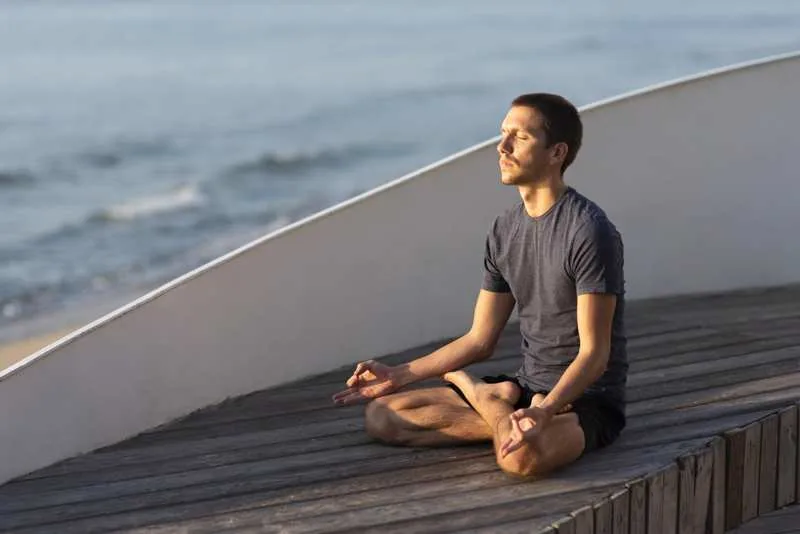
Meditation sessions are held in the early morning and again in the evening. The approach is simple. Students sit in a comfortable position and practice techniques such as breath observation, mantra repetition, and body scanning.
The instruction does not promise instant calm or transcendence. Instead, it acknowledges that meditation is difficult. The mind wanders. The body becomes uncomfortable. These are normal parts of the practice.
Over the course of the training, students begin to notice patterns in their minds. They see how thoughts arise and pass. They experience moments of stillness, but also moments of restlessness. Both are part of the process.
Yoga Philosophy Fundamentals
The philosophy component covers the essential texts and concepts that inform traditional yoga practice. This includes an introduction to the Yoga Sutras of Patanjali, the Bhagavad Gita, and the Hatha Yoga Pradipika.
Students learn about the eight limbs of yoga, the concept of the gunas, the role of karma and dharma, and the basic framework of yogic philosophy. The teaching is not academic. It connects the texts to the practice students are doing each day.
Discussions are encouraged, but the focus remains on understanding the ideas as they relate to personal practice, not on philosophical debate for its own sake.
Teaching Methodology Basics
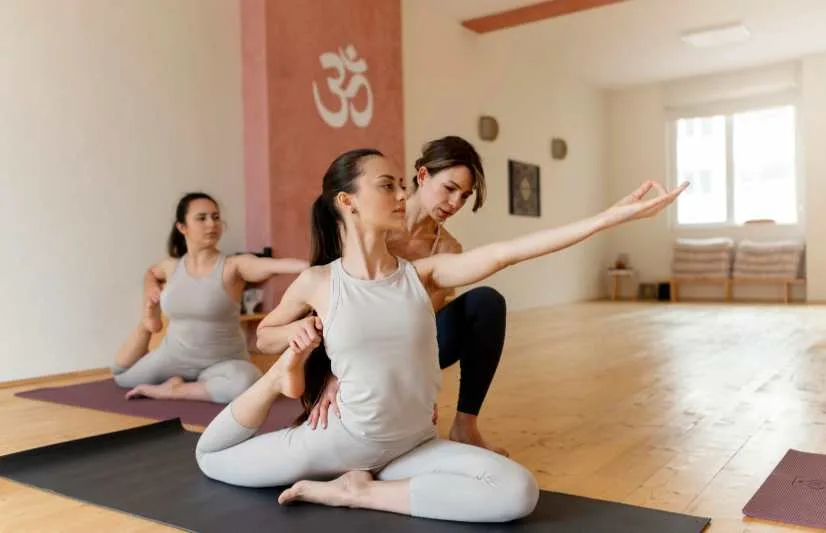
The teaching methodology section introduces students to the basics of how to guide a class. This includes how to demonstrate a pose, how to give verbal instructions, how to observe students, and how to offer simple adjustments.
Students practice teaching in small groups. They learn how to structure a short sequence, how to pace a class, and how to speak clearly without over-explaining. The feedback they receive is direct and constructive.
This part of the training is not meant to make you a fully prepared teacher. It is meant to show you what teaching requires and whether it is something you want to explore further. Many students realize that teaching is more challenging than they expected. This is useful information.
Why Goa Is a Suitable Place for This Training
Goa has a long history as a destination for yoga education. The climate is warm, the landscape is varied, and the culture is more relaxed than in many other parts of India. These factors make it easier to focus on learning without excessive discomfort or distraction.
The environment supports the kind of routine that a training like this requires. You can wake early without struggle. You can practice outside when the weather allows. You can walk near the ocean or through quiet villages when you need to clear your mind.
There is also a community of yoga schools and practitioners in Goa, which means there are resources available if you want to continue learning after the training ends. The presence of other students and teachers creates a sense of shared purpose without pressure.
At the same time, Goa is not isolated. You can access what you need in terms of food, accommodation, and basic amenities. The setting is simple but not harsh. This balance makes it easier to stay focused on the training itself.
The location of Advait Yoga Meditation is chosen for its quietness. It is not in the center of tourist activity. The space allows for uninterrupted practice and study, which is what this kind of training needs.

Daily Schedule
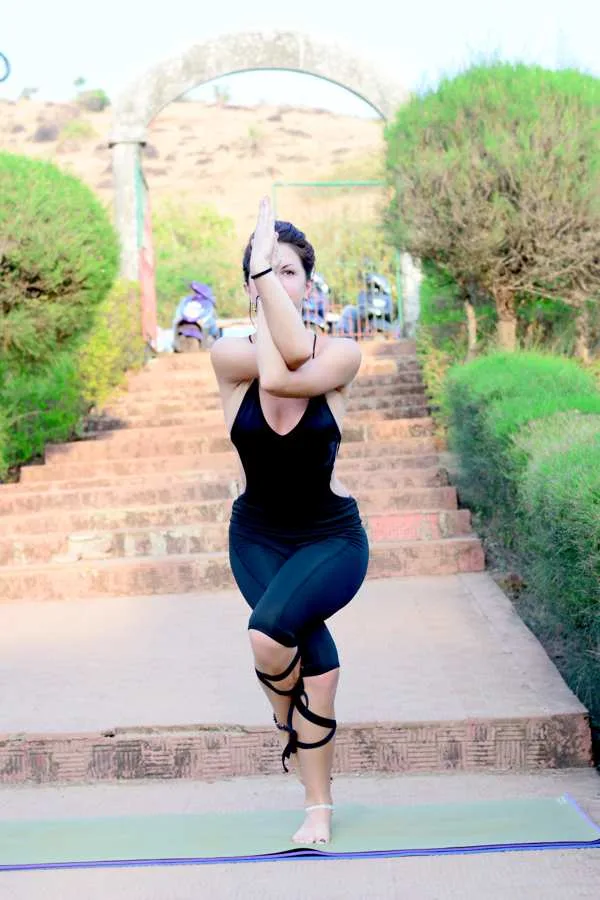
| Time | Activity |
|---|---|
| 6:00 AM | Wakeup |
| 7:30 - 9:00 AM | Asana Practice |
| 9:00 - 10:00 AM | Breakfast |
| 10:00 - 11:45 AM | Teaching Methodology |
| 11:45 AM - 1 PM | Yoga Phylosophy |
| 1:00 - 2:00 PM | Lunch |
| 2:30 - 4:00 PM | Anatomy |
| 4:00 - 5:45 PM | Asana Practice |
| 6:00 - 7:00 PM | Meditation |
| 7 : 30 PM | Dinner |
Please Note: This daily schedule is sample schedule and can be changed during TTC.
Accommodation




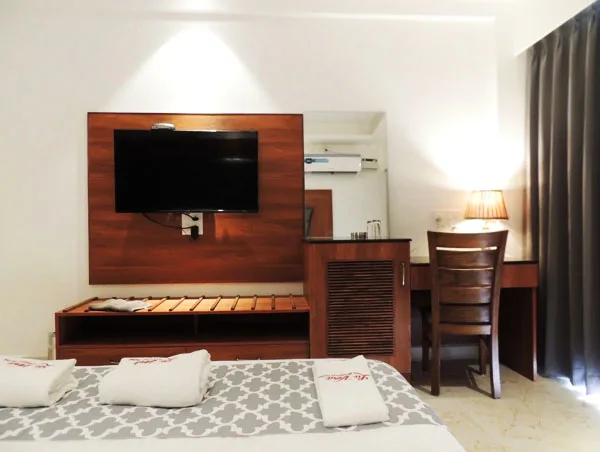
Live and learn in a peaceful and supportive yogic environment.
-
Clean & comfortable rooms with private bathrooms
-
Yoga hall & open lounge spaces for self-practice
-
Wi-Fi available
-
Close to cafes, beaches & nature — yet calm for studies
Your stay is within the yoga school — no daily travel required.
Pricing and Date
| Course Date | Private Room | Twin Share Room | Availability |
|---|---|---|---|
| 5 - 15 Feb 2026 | €1200 | €1000 | Book Now |
| 16 - 26 Feb 2026 | €1200 | €1000 | Book Now |
| 5 - 15 Mar 2026 | €1200 | €1000 | Book Now |
| 16 - 26 Mar 2026 | €1200 | €1000 | Book Now |
| 5 - 15 Apr 2026 | €1200 | €1000 | Book Now |
| 16 - 26 Apr 2026 | €1200 | €1000 | Book Now |
| 5 - 15 May 2026 | €1200 | €1000 | Book Now |
| 16 - 26 May 2026 | €1200 | €1000 | Book Now |
| 5 - 15 Oct 2026 | €1200 | €1000 | Book Now |
| 16 - 26 Oct 2026 | €1200 | €1000 | Book Now |
| 5 - 15 Nov 2026 | €1200 | €1000 | Book Now |
| 16 - 26 Nov 2026 | €1200 | €1000 | Book Now |
| 5 - 15 Dec 2026 | €1200 | €1000 | Book Now |
| 16 - 26 Dec 2026 | €1200 | €1000 | Book Now |
Included:
✔ Complete course syllabus
✔ Study material / Yoga kit
✔ Accommodation & meals
✔ Weekly excursion
✔ Certificate of completion
Not Included:
✘ Flights
✘ Laundry & personal expenses
✘ Visa Fees
Who This Training Is Suitable For
This training is suitable for people who have been practicing yoga for at least a few months and who want to understand it more deeply. It is not designed for complete beginners, though students do not need to be advanced practitioners.
If you have been attending classes regularly and you feel curious about the philosophy, the breath work, or the teaching aspect of yoga, this training might be appropriate. It is also suitable for those who are considering a longer teacher training but want to try something shorter first.
People who benefit most from this program are those who are comfortable with discipline. The schedule is fixed. The expectations are clear. If you prefer flexibility or spontaneity in your learning, this may not be the right environment.
The training is also appropriate for practitioners who want to refine their personal practice without necessarily planning to teach. Many students enroll simply because they want structured guidance and dedicated time to learn.
It is not suitable for people looking for a wellness retreat or a vacation with yoga included. The days are full. The work is consistent. There is rest, but there is no leisure in the conventional sense.
How This Training Differs From Longer Teacher Trainings
A 100 hour program covers less ground than a 200 hour training. The depth of study is limited by time. Certain topics are introduced but not fully explored. The teaching practice component is shorter, and students have fewer opportunities to refine their skills.
In a longer training, there is time to revisit concepts, to practice more extensively, and to develop confidence as a teacher. A 100 hour course does not offer that. It gives you the outline, not the detail.
The pace is also different. In a shorter training, material is presented more quickly. There is less time to absorb each idea before moving to the next. Some students find this challenging. Others appreciate the efficiency.
Longer trainings also tend to include more anatomy, more adjustments practice, and more discussion of teaching ethics and business. These elements are touched on briefly in a 100 hour course but are not covered in depth.
The certification you receive after completing a 100 hour training is recognized by some studios, but not all. Many schools and organizations require a 200 hour certification as the minimum for teaching. If your goal is to teach professionally, you will likely need to continue your education after this course.
However, the 100 hour training can be counted toward a 200 hour certification in some cases. This depends on the school and the accrediting body. At Advait Yoga Meditation, students who complete this program and wish to continue are given clear guidance on how to proceed.
The value of this training is not in the certificate. It is in the learning itself. If you approach it with that understanding, it will serve you well.
Certification & Educational Pathway
Upon successful completion, you will receive:
🎓 100 Hour Yoga Teacher Training Certificate
from Advait Yoga Meditation
This 100 hours can be credited toward completing your 200 Hour TTC with us in India or Thailand in future (subject to course availability).
Perfect for Continuing Education & personal development.
Teaching Approach at Advait Yoga Meditation
The teaching at Advait Yoga Meditation is rooted in traditional hatha yoga. The instructors have practiced and studied for many years, both in India and elsewhere. They teach from experience, not from scripts or standardized modules.
The approach is disciplined but not harsh. Students are expected to show up on time, to follow the schedule, and to take the practice seriously. At the same time, the environment is not judgmental. Mistakes are part of learning, and students are encouraged to ask questions when they do not understand something.
The focus is on awareness. In asana practice, students are taught to notice what is happening in the body rather than forcing themselves into shapes. In pranayama, the emphasis is on observing the breath before trying to control it. In meditation, the instruction is to watch the mind without trying to fix it.
This kind of teaching does not produce dramatic changes overnight. It is slower and quieter than many modern approaches. Some students find it frustrating at first. Over time, most come to appreciate the steadiness of it.
The teachers at Advait Yoga Meditation are not trying to impress you. They are trying to teach you. There is a difference. The instruction is clear, the feedback is honest, and the standards are consistent.
The 100 Hour Yoga Teacher Training in Goa at this school is designed to reflect these values. It is not a product. It is a program of study led by people who take yoga seriously and who expect the same from their students.
Location
Enjoy the tropical environment of Goa — golden beaches, lush greenery, fresh sea air, and calming spiritual energy.
Nearest airports:
-
Goa Dabolim International Airport
-
Mopa International Airport (North Goa)
Airport pickup can be arranged upon request.
this content in the module Design settings and even apply custom CSS to this text in the module Advanced settings.
Practical Information About the Training
The training runs for approximately two weeks, with classes six days a week. The schedule typically begins at sunrise and includes multiple sessions throughout the day. Evenings are reserved for rest, self-study, or optional discussion.
Accommodation is simple. Most students stay in shared or private rooms near the training location. Meals are vegetarian and prepared with attention to digestion and energy levels. The food is not elaborate, but it is clean and appropriate for the kind of work students are doing.
Students are expected to bring their own mat, notebook, and any personal items they need. A reading list is provided in advance, though books are also available at the school. There is no required uniform, but clothing should be modest and suitable for movement.
The group size is kept small to allow for individual attention. This also creates a quieter, more focused atmosphere. You will get to know the other students, but the training is not centered on socializing.
Assessment is ongoing rather than formal. Teachers observe students throughout the program and provide feedback as needed. There is no final exam, but students are expected to demonstrate understanding of the material through their practice and teaching assignments.
Upon completion, students receive a certificate acknowledging their participation and the hours completed. This certificate can be used as a foundation for further study or as documentation of serious practice.
Frequently Asked Questions
What should I bring?
Comfortable clothes, a notebook, and an open heart. We provide mats and props.
Can I join the 200h TTC later?
Yes! Your completed 100h will be credited fully when you continue with us.
Is 100-hour enough to start teaching?
This is a foundational course. You can begin developing teaching skills and later complete 200h TTC to become a certified yoga teacher.
Do I need experience?
No. Beginners are welcome!
Closing Reflection
A 100 Hour Yoga Teacher Training in Goa is a specific kind of learning. It is not for everyone. It requires time, attention, and a willingness to follow a structure that may feel unfamiliar at first.
What it offers is a clear introduction to the practice and study of yoga as a discipline. It does not make grand claims. It does not promise outcomes. It simply provides a framework for learning and allows students to make what they will of it.
At Advait Yoga Meditation, this training is taught by people who understand yoga as a long-term practice, not a weekend workshop. The instruction is grounded in tradition, informed by experience, and offered with respect for each student's capacity and intention.
If you are ready for that kind of learning, this program may serve you well. If you are not, it is better to wait until you are.