Introduction
A 100 hour yoga teacher training in Thailand is not meant to make you an expert. It is meant to give you a foundation—one built with attention, repetition, and time spent observing how the body moves, how the breath works, and what actually happens when you teach.
This is an 11-day residential course held in Koh Samui. It covers foundational asana, alignment principles, basic anatomy, pranayama, meditation practice, yoga philosophy, and teaching methodology. The setting is quiet. The schedule is structured. The approach is direct.
Most people who join this training are beginners. Some have been practicing for a few years and want to understand more. Others are preparing for a 200-hour certification later. A few simply want to deepen what they know without the pressure of becoming a teacher right away.
Koh Samui offers something practical for this kind of learning. The island is warm, relatively quiet, and removed from the usual flow of daily obligations. You wake up, practice, study, eat, and rest in a rhythm that supports focus. There is an ocean nearby. The air is humid. The pace is slower than most places.
This course does not promise transformation. It offers instruction, structure, and enough repetition to begin forming a reliable practice. What you do with that afterward is your own work.
Who This Training Is For
This training is designed for people who are starting out—either as practitioners or as those considering teaching.
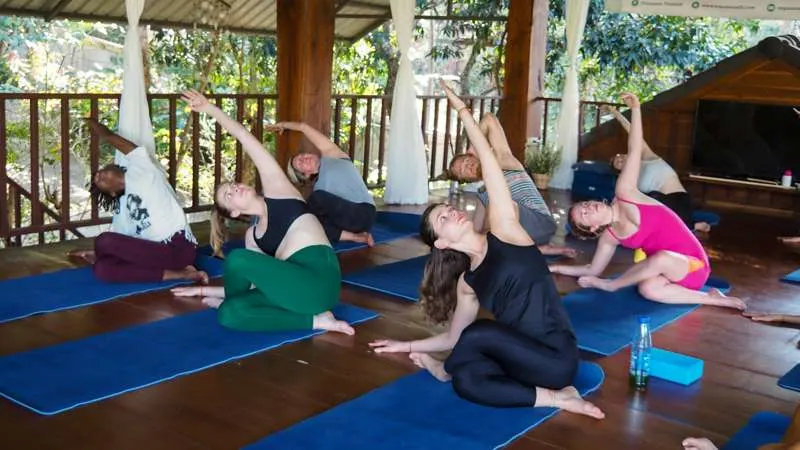
It suits complete beginners who want structured guidance from the beginning. Many people practice yoga casually for years without understanding alignment, breath coordination, or the principles that make a pose safe. This course addresses that gap.
It also works for dedicated practitioners who have been attending classes but want to go deeper. Practicing in a studio once or twice a week is different from spending eleven days immersed in the subject. The residential format allows for consistency that drop-in classes cannot provide.
Some participants use this as preparation for a 200-hour yoga TTC Thailand program. They want to build confidence before committing to a longer course. Others have no intention of teaching but want a clearer understanding of what they are doing on the mat.
A few join because they need structure. They have practiced on and off, without consistency, and want an environment that supports daily discipline. Eleven days is long enough to establish a routine and short enough to fit into most schedules.
This is not for people looking for a quick certification to add to a resume. It is for those willing to show up each day and engage with the material seriously.
Why a 100 Hour Yoga Teacher Training in Thailand
The value of a 100-hour format is in its focus. It does not try to cover everything. Instead, it concentrates on building a stable foundation in alignment-based practice, basic anatomy awareness, breath work, and introductory teaching skills.
Many beginner yoga teacher training Thailand programs start at 200 hours, which is the minimum for Yoga Alliance certification. But 200 hours can feel overwhelming for someone new to the practice. A 100-hour course allows you to learn at a more measured pace, with fewer students and more individual attention.
The difference between practicing yoga and understanding it becomes clear once you start studying alignment principles, anatomy, and teaching methodology. You begin to see why certain cues are used, why some adjustments are helpful and others are not, and how to structure a class that is safe and coherent.
Learning in a retreat setting—especially in a residential yoga course Thailand—removes distractions. You are not commuting. You are not managing work emails between sessions. You are in one place, with one purpose, for eleven days. That kind of immersion allows information to settle in a way that weekend workshops cannot match.
Thailand has become a destination for yoga training partly because of cost, partly because of climate, and partly because the culture supports quiet, inward-focused work. Koh Samui, specifically, is warm year-round, less commercialized than some other Thai islands, and offers a balance between accessibility and seclusion.
A shorter intensive also gives you the chance to test whether teaching is something you want to pursue. Not everyone who completes a yoga teacher training intends to teach. Some do it to deepen their own practice. A 100-hour program lets you explore that question without the larger time and financial commitment of a 200-hour course.
Why Koh Samui, Thailand
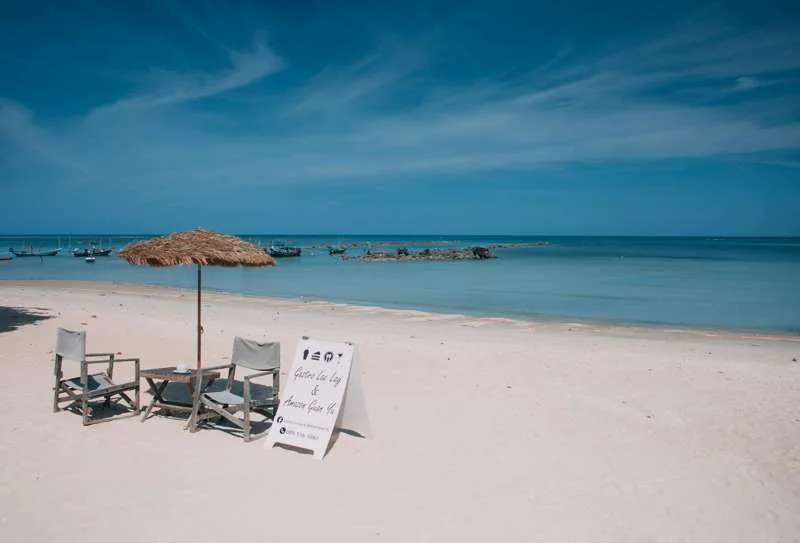
Koh Samui is a small island in the Gulf of Thailand. It is warm, green, and surrounded by water. The setting is conducive to the kind of steady, focused work that yoga training requires.
The island has a rhythm that suits residential courses. Mornings are cooler. Afternoons are hot. Evenings bring relief. The climate is predictable, which makes it easier to maintain a daily routine without the disruptions of unpredictable weather.
There is an ocean. Some people find that helpful—not in a romanticized way, but because being near water offers a certain kind of spaciousness. You can walk along the shore in the early morning or late evening if you need a break from the schedule.
The environment is quieter than a city. There is less noise, fewer demands on your attention, and more room to settle into the rhythm of the training. You are not trying to fit yoga into your existing life. For eleven days, the training is your life.
Koh Samui is also accessible. Direct flights arrive from Bangkok, Singapore, and other regional hubs. The island has infrastructure—pharmacies, markets, basic services—without being overly developed. It is functional without being chaotic.
What You Will Learn (Syllabus)
Foundational Asana Practice (Hatha & Multi-style)
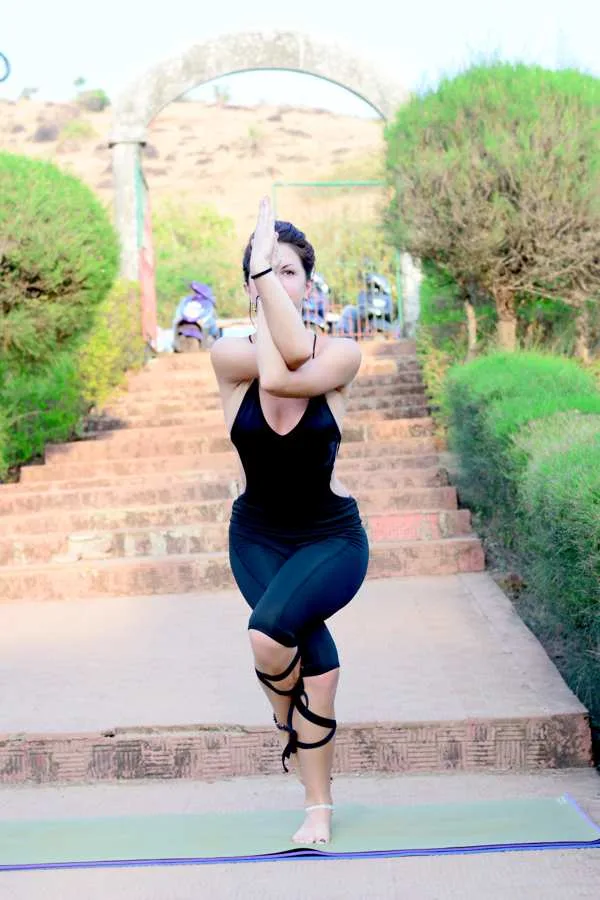
You will practice daily. The asana sessions include Hatha yoga and alignment-based Vinyasa. The focus is on learning the mechanics of each pose—how to enter, hold, and exit safely. You will work with standing poses, seated poses, forward bends, backbends, twists, and inversions at a foundational level.
Repetition is built into the schedule. You will do similar sequences multiple days in a row. This allows the body to adapt and the mind to observe patterns. It also gives you the chance to refine your understanding of each pose over time.
Alignment & Safety Principles
Alignment is not about achieving a perfect shape. It is about understanding how the body works within a pose and how to minimize unnecessary strain. You will learn to observe joint positioning, weight distribution, and muscular engagement.
Safety principles include recognizing common injuries, understanding contraindications, and knowing when to modify or skip a pose. This section is practical and anatomy-informed.
Introduction to Yoga Philosophy
This course introduces classical yoga philosophy without overwhelming beginners. You will study basic concepts from the Yoga Sutras, the eight limbs of yoga, and the ethical foundations outlined in the yamas and niyamas.
Philosophy is taught in a way that connects to practice. You will not be asked to memorize Sanskrit terms or engage in abstract discussion. The focus is on how these ideas inform the way you practice and teach.
Basic Anatomy for Yoga Teachers
You will study the musculoskeletal system as it relates to asana. This includes understanding major muscle groups, joint function, and common movement patterns. The anatomy component is taught visually and experientially, with reference to poses practiced during the course.
You will learn enough to teach safely, recognize common postural patterns, and communicate adjustments with clarity.
Pranayama Foundations
Pranayama is the practice of breath regulation. You will learn foundational techniques including ujjayi breath, alternate nostril breathing, and diaphragmatic breathing. The emphasis is on understanding the mechanics of the breath and how it supports both practice and mental clarity.
This is not advanced breathwork. It is an introduction to techniques you can practice safely on your own and eventually teach to beginners.
Meditation Basics
Meditation sessions are held daily. You will practice seated meditation, body scanning, and breath awareness. The instruction is simple and non-dogmatic.
You will also learn how to guide a short meditation at the end of a yoga class—something most teachers are expected to do but are rarely taught how to do well.
Teaching Methodology
This section covers the practical skills of teaching: how to structure a class, how to sequence poses logically, how to give clear verbal cues, and how to observe students during practice.
You will practice teaching in small groups. Feedback is direct and constructive. The goal is to help you develop confidence without performing or over-explaining.
Structuring a Class
You will learn how to build a coherent class sequence. This includes understanding warm-ups, peak poses, counter-poses, and cool-downs. You will also learn how to time a class so that it flows without rushing or dragging.
Ethical Foundations of Teaching
Teaching yoga involves responsibility. You will study the ethics of touch, language, power dynamics, and boundaries in a teacher-student relationship. This section is grounded in real scenarios and practical considerations.
Daily Schedule
| Time | Activity |
|---|---|
| 6:00 AM | Wakeup |
| 7:30 - 9:00 AM | Asana Practice |
| 9:00 - 10:00 AM | Breakfast |
| 10:00 - 11:45 AM | Teaching Methodology |
| 11:45 AM - 1 PM | Yoga Phylosophy |
| 1:00 - 2:00 PM | Lunch |
| 2:30 - 4:00 PM | Anatomy |
| 4:00 - 5:45 PM | Asana Practice |
| 6:00 - 7:00 PM | Meditation |
| 7 : 30 PM | Dinner |
Please Note: This daily schedule is sample schedule and can be changed during TTC.
Teaching Approach at Advait Yoga Meditation
The teaching at Advait Yoga Meditation is experience-based. Instructors teach from years of practice and study, not from scripts or trends. The approach is rooted in traditional yoga principles but communicated with modern clarity.
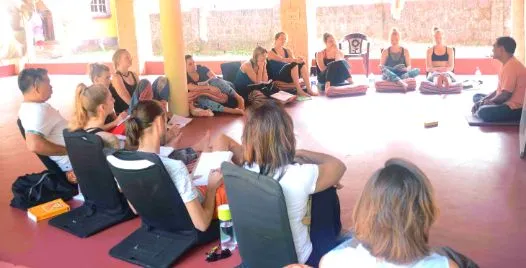
Classes are small. This allows for individual attention and the ability to address specific questions or challenges as they arise. You are not sitting in a lecture hall with fifty other students. You are part of a group where your progress is noticed.
Alignment and safety are emphasized throughout the course. Every pose is taught with attention to how it affects the body. Adjustments are offered thoughtfully, with consent, and only when necessary.
The teaching values presence over performance. You are not being trained to deliver a scripted class or adopt a particular persona. You are learning to observe, communicate clearly, and guide students through a practice that is safe and accessible.
The environment is disciplined but not rigid. Questions are welcome. Discussion is encouraged when it serves the learning process. The focus is on building competence, not creating a particular image of what a yoga teacher should be.
Accommodation
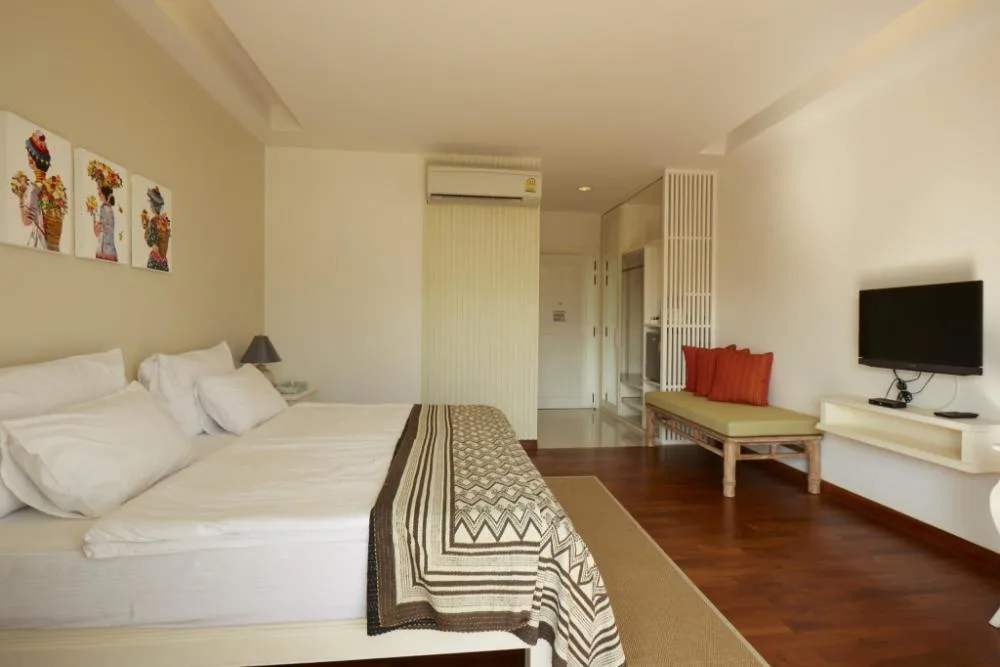
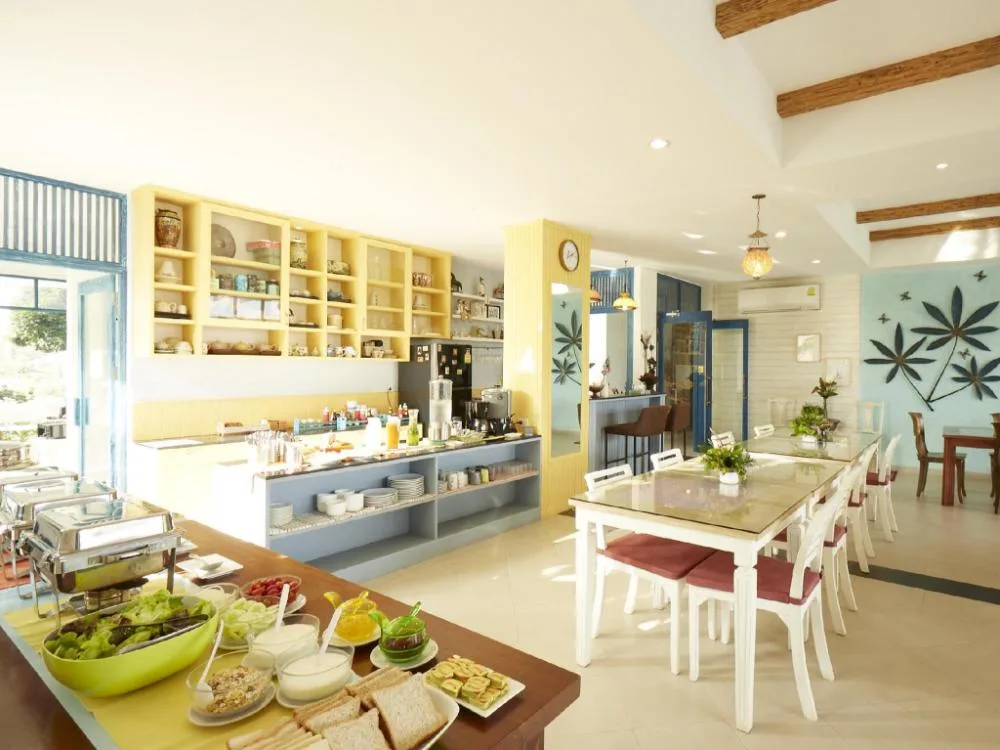
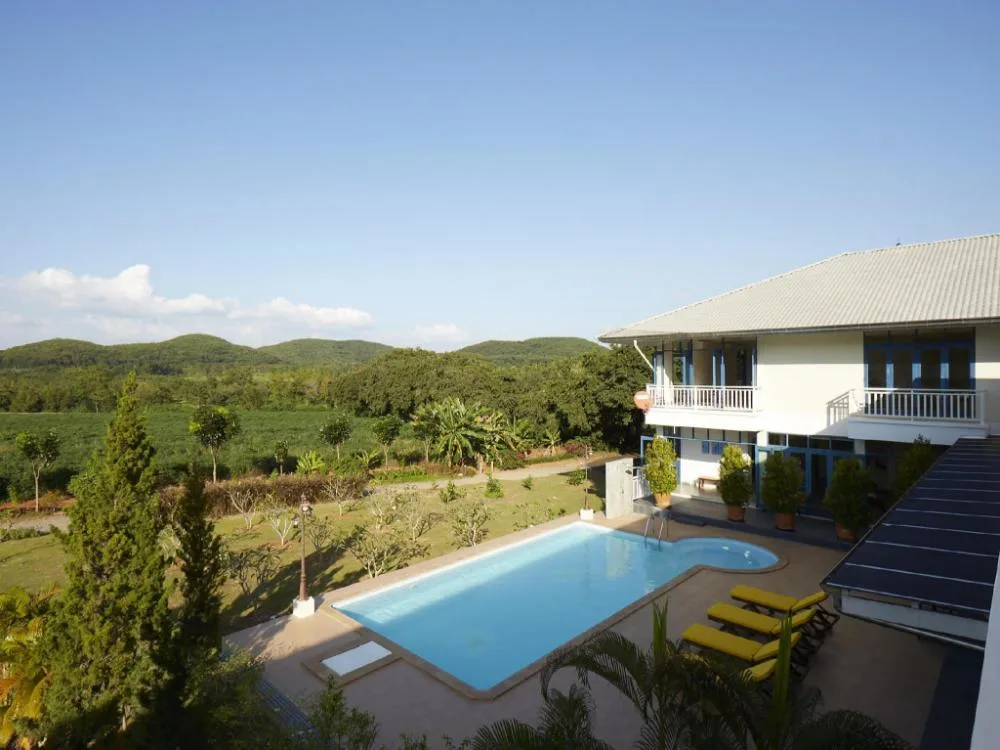
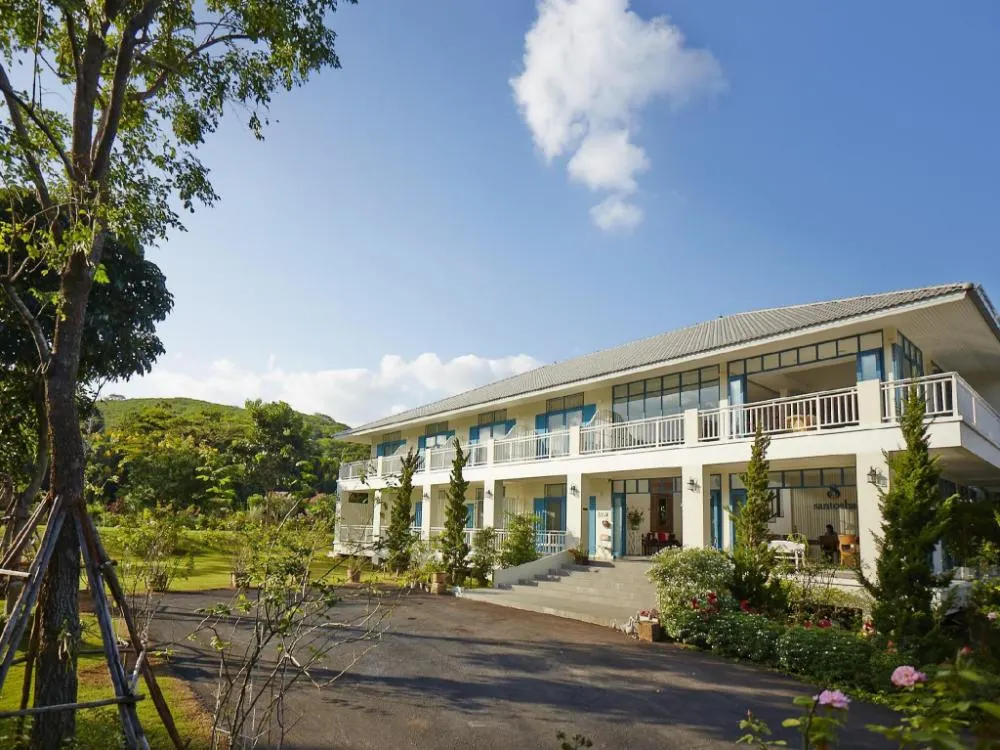
Accommodation is residential and included in the course fee. Rooms are clean, simple, and comfortable. Most participants stay in shared rooms, though private options may be available depending on availability.
The accommodation is within walking distance of the practice hall. This makes it easy to move between sessions without needing transportation.
The setting is quiet. Rooms are basic but functional, with air conditioning, clean bedding, and access to shared bathrooms or private facilities depending on the room type.
Upcoming Dates
Included
- 11 days of instruction
- Shared accommodation
- Three vegetarian meals per day
- Course materials (manual, reading list)
- Access to practice hall and facilities
- Certificate of completion upon finishing the course
Not Included
- Flights to and from Koh Samui
- Airport transfers
- Travel insurance
- Personal expenses
- Visa fees (if applicable)
- Private accommodation upgrades (if requested)
Refund Policy
If you cancel more than 30 days before the course start date, you will receive a full refund minus a processing fee.
If you cancel between 15 and 30 days before the start date, you will receive a 50% refund.
If you cancel fewer than 15 days before the start date, no refund will be issued.
In the event of illness or emergency, exceptions may be considered on a case-by-case basis. Documentation may be required.
Course fees are non-transferable to other participants but may be transferred to a future course date within one year, subject to availability.
Practical Information
Nearest Airport
Koh Samui International Airport (USM) is the closest airport. It is serviced by direct flights from Bangkok, Singapore, Kuala Lumpur, and Hong Kong.
Alternatively, you can fly into Surat Thani Airport (URT) on the mainland and take a ferry to the island. This is often less expensive but takes longer.
Arrival Guidance
You are expected to arrive one day before the course begins. The training starts early on Day 1, so arriving the evening before ensures you are rested and ready.
If you need assistance arranging airport pickup or accommodation for the night before, contact the school directly.
Language of Instruction
All instruction is conducted in English. Participants should be comfortable understanding and communicating in English, as this is the primary language used for teaching, discussion, and written materials.
Group Size
Groups are kept small, typically between 10 and 15 participants. This ensures that each person receives adequate attention and feedback throughout the course.
Daily Expectations
You are expected to attend all scheduled sessions. Punctuality is required. The training is intensive, and missing sessions affects both your learning and the group dynamic.
You are also expected to participate in communal activities, including shared meals and group discussions, with respect and openness.
Code of Conduct
Respect
All participants are expected to treat instructors, staff, and fellow students with respect. This includes listening without interrupting, honoring personal boundaries, and refraining from behavior that disrupts the learning environment.
Discipline
Attendance is mandatory. Late arrivals and early departures disrupt the flow of the course. If you have a medical or personal issue that requires absence or modification, speak with an instructor privately.
Attendance
You must attend at least 90% of all sessions to receive a certificate of completion. This includes asana practice, theory sessions, and teaching practicums.
Personal Responsibility
You are responsible for your own health and safety. If you have an injury or medical condition, inform the instructors before the course begins. Do not practice beyond your capacity. It is your responsibility to rest, hydrate, and ask for modifications when needed.
Location & How to Get There
Advait Yoga Meditation is located on the quieter side of Koh Samui, away from the main tourist areas. The exact location details will be provided upon registration.
How to Get to Koh Samui
By air: Fly into Koh Samui International Airport (USM). From there, arrange a taxi or private transfer to the course location. Travel time is approximately 20 to 30 minutes depending on traffic.
By ferry: If you arrive via Surat Thani Airport or prefer a more budget-friendly option, take a bus or taxi to the ferry terminal and board a ferry to Koh Samui. Ferries run regularly throughout the day. From the pier, arrange onward transport to the school.
Airport Transfer Information
Airport transfers can be arranged in advance for an additional fee. Contact the school at least one week before your arrival to coordinate pickup. Shared transfers may be available if multiple participants are arriving on the same day.
FAQ
Is this course suitable for complete beginners?
Yes. The course is designed with beginners in mind. You do not need prior teaching experience or an advanced asana practice. You need willingness to learn, physical health adequate for daily practice, and the ability to commit to the full 11 days.
Will I be certified after 100 hours?
You will receive a certificate of completion from Advait Yoga Meditation. This is not a Yoga Alliance certification, as the minimum standard for that is 200 hours. However, the certificate confirms that you have completed foundational training in alignment, anatomy, philosophy, and teaching methodology.
Some students use this certificate to begin teaching beginner-level classes in informal settings. Others use it as a stepping stone toward a 200-hour yoga certification Thailand program.
Can I continue to a 200-hour training later?
Yes. Many participants go on to complete an additional 100 hours to meet the 200-hour standard. Some schools, including Advait Yoga Meditation, offer pathways for students who have completed the 100-hour course to continue their training. Contact the school to discuss options.
Is prior teaching experience required?
No. This course assumes you are starting from the beginning. Most participants have little to no teaching experience. The teaching methodology section introduces you to the basics of sequencing, cueing, and observing students in a supportive environment.
Is the course physically intense?
The course involves daily asana practice, which can be physically demanding, especially if you are not used to practicing every day. However, the intensity is manageable for most people in reasonable health. Modifications are offered, and you are encouraged to rest when needed.
If you have a pre-existing injury or medical condition, inform the instructors before the course begins. They can provide guidance on how to adapt the practice to suit your needs.