About The Training
Advanced training differs from foundational certification. A 200-hour course introduces teaching basics. A 300 hour advanced yoga teacher training in Thailand builds technical precision, deepens understanding of anatomy and philosophy, and develops the discernment that comes from sustained practice and study.
Twenty-eight days creates the conditions for this kind of work. Short workshops offer exposure. Intensive residential training offers integration. When you study in the same place, with consistent guidance, away from the interruptions of daily life, learning moves beneath surface concepts into embodied knowledge. Thailand provides a stable environment for this—predictable climate, natural surroundings, and the practical simplicity needed for focused study.
This is not about transformation promises or peak experiences. It is about refining your capacity to teach with accuracy, to sequence with intelligence, to understand what you are asking students to do and why it matters.
Who This Training Is For
This training is designed for teachers who have completed a 200-hour yoga teacher training and are ready to deepen their practice and teaching skills. It is for those who recognize that foundational certification was a beginning, not a conclusion.
You may be teaching regularly and encountering questions you cannot yet answer with clarity. You may feel uncertain about how to adjust poses for different bodies, or how to build a class that flows with intention rather than repetition. You may want to understand the philosophy you reference in class, or to develop a personal practice that extends beyond what you teach.
This program is for practitioners who value discipline over convenience. The schedule is structured. The study is demanding. Attendance and participation are expected. If you are looking for casual exploration or vacation-style training, this is not the right fit.
It is for teachers who want depth beyond asana performance—who are interested in the mechanics of breath, the logic of sequencing, the application of classical texts, and the responsibility that comes with guiding others.
Why a 300 Hour Advanced Yoga Teacher Training in Thailand
A 300 hour yoga certification Thailand program expands on what a 200-hour training introduces. Where foundational training covers breadth, advanced training addresses depth. You learn not only what to teach, but how to adapt, observe, correct, and guide students through different stages of ability and understanding.
The difference between teaching safely and teaching skillfully is significant. Safety means avoiding obvious harm. Skill means recognizing subtle misalignment, understanding when to progress or regress a pose, knowing which cue will land with which student, and building sequences that prepare the body intelligently for what comes next.
This requires mentorship. Advanced training is not about absorbing more information. It is about applying what you know under observation, receiving feedback, adjusting, and trying again. It is about learning to see your own teaching clearly and to make decisions rooted in principle rather than habit.
Immersive residential study supports this process. When you live where you train, you are not managing two lives simultaneously. Your nervous system settles. Your attention becomes available. The learning that happens in formal sessions continues in meals, rest periods, and personal practice. Environment influences focus and integration more than most teachers realize before experiencing it.
Why Thailand
Thailand offers practical advantages for intensive study. The climate is warm and consistent, which supports physical practice without the variables of cold or seasonal change. The natural environment—coastal or island settings surrounded by greenery and ocean—creates a backdrop that supports rather than distracts.
Space away from familiar routines matters. When you are not managing work emails, household responsibilities, or social obligations, you can give full attention to the work in front of you. Simplicity in daily life—clean accommodations, prepared meals, minimal decisions—frees mental energy for study and practice.
The culture in Thailand has long supported meditation and contemplative practice. While this training is not a cultural immersion program, the ambient respect for quiet discipline and mindful living aligns with the tone of serious yoga study.
This is not about tropical luxury or escape. It is about having the conditions in place to do difficult, sustained work without unnecessary friction.
What You Will Learn (Advanced Syllabus)
Advanced Asana Refinement & Alignment Precision
Advanced asana study examines the mechanics of how poses work and where they fail. You will refine your understanding of alignment not as fixed positions, but as relationships between bones, joints, and muscle actions that change depending on individual structure.
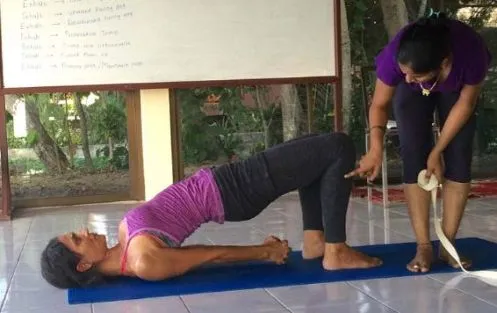
You will learn to observe compensations—how students shift weight, rotate limbs, or collapse certain areas to achieve a shape. You will practice adjusting poses for different proportions, joint ranges, and strength imbalances. This includes working with props not as modifications for beginners, but as tools for precision at all levels.
Expect detailed work in standing poses, forward bends, backbends, twists, inversions, and arm balances. The focus is not on performing advanced variations, but on understanding the foundational mechanics that make any variation safe and sustainable.
Intelligent Sequencing & Thematic Structuring
Sequencing is the architecture of a class. Poor sequencing asks the body to do things it is not prepared for. Intelligent sequencing builds capacity progressively, prepares joints and tissues, and creates a logical progression toward peak poses or practices.
You will learn to sequence by anatomical logic—how to warm the hips before deep hip openers, how to prepare the shoulders before arm balances, how to integrate counter-poses that restore balance. You will also explore thematic sequencing—building classes around a physical focus, a philosophical concept, or a particular energetic quality.
This section includes hands-on practice: you will plan sequences, teach them to the group, and receive structured feedback on pacing, transitions, clarity of instruction, and coherence.
Advanced Anatomy & Biomechanics
Anatomy for teachers goes beyond memorizing muscle names. It requires understanding how forces move through the body, where joints are vulnerable, and why certain actions create certain results.
This module covers functional anatomy—how the hip joint moves in different planes, why knee alignment matters in lunges, what happens to the spine in twists and backbends. You will study common injury patterns and how to recognize them early. You will learn the biomechanics of breath and how ribcage, diaphragm, and pelvic floor interact.
Teaching includes visual aids, palpation practice, and movement analysis. The goal is to build a working knowledge you can apply in real teaching situations, not abstract information stored for exams.
Advanced Pranayama Techniques
Pranayama at an advanced level is systematic and precise. You will learn techniques beyond basic breath awareness—alternate nostril breathing, retention practices, bandhas, and subtle breath manipulations that influence the nervous system.
This is technical work. You will understand the contraindications, the appropriate contexts, and the progression required to teach these practices safely. Pranayama is not relaxation alone; it is a tool with specific effects that must be applied with knowledge and respect.
You will practice daily, building your own capacity before attempting to guide others. Expect detailed instruction on ratios, rhythms, and the physical and energetic effects of different techniques.
Meditation Intensives & Silent Practice
Meditation is often taught loosely in yoga classes—a few minutes at the end of practice with little structure. This training treats meditation as a discipline with its own methods, challenges, and depth.
You will practice sitting meditation daily, often for extended periods. You will explore concentration practices, awareness practices, and different objects of meditation. You will learn to recognize common obstacles—restlessness, dullness, distraction—and how to work with them.
Silent periods are included. Silence is not symbolic; it is practical. It reduces stimulation, clarifies attention, and allows you to observe the movement of your own mind without the interference of social interaction.
Classical Yoga Philosophy Deep Study
Philosophy provides context for practice. Without it, yoga becomes exercise with spiritual language attached. With it, practice becomes part of a larger framework of understanding.
This module covers key texts—the Yoga Sutras, Bhagavad Gita, and Hatha Yoga Pradipika—not as abstract philosophy, but as practical guides. You will examine concepts like the kleshas, the gunas, the eight limbs, and the nature of suffering and liberation.
Classes involve reading, discussion, and application. How do these ideas inform the way you teach? How do they affect the choices you make in your own practice and life? Philosophy is not about belief; it is about investigation and understanding.
Subtle Body & Energetic Awareness
The subtle body refers to energetic structures—chakras, nadis, koshas—that are not visible but can be experienced. This teaching is often misrepresented or oversimplified.
You will learn the traditional maps of subtle anatomy and how they relate to physical practice, breath, and meditation. You will explore how different practices influence energy, and how to recognize and work with energetic states without relying on metaphor or vague language.
This section is grounded in classical texts and direct experience, not New Age interpretation. It requires patience and careful observation.
Teaching Methodology & Mentorship
Teaching methodology addresses the practical skills of leading a class—how to use language, how to demonstrate, how to manage time, how to create safety, and how to hold space for a group with varying needs and abilities.
You will learn different teaching models: demonstration-based, verbal cueing, hands-on adjustment, and observational teaching. You will practice giving clear, concise instructions that students can follow without confusion.
Mentorship means teaching under supervision and receiving direct feedback. You will teach multiple times throughout the training, with structured critique on your choices, delivery, and presence. This is uncomfortable and necessary. It is where real growth happens.
Observation, Feedback & Practicum
Observation is a skill. Most new teachers watch students but do not see what is happening—they miss compensations, misalignments, and signs of strain or disengagement.
You will practice watching others teach and watching students practice. You will learn what to look for and how to prioritize—when to intervene, when to wait, and how to communicate adjustments that are actually helpful.
Practicum sessions give you repeated teaching opportunities. You will lead segments of class, receive feedback, adjust your approach, and teach again. Repetition with reflection builds competence.
Ethics & Responsibility of Senior Teachers
Teaching yoga places you in a position of influence. Students often grant trust without question. This creates responsibility.
You will discuss ethical boundaries—how to navigate power dynamics, how to handle personal disclosure, how to recognize when your guidance is outside your scope, and when to refer students to other professionals.
Ethics also includes honesty about your own limitations, ongoing study and self-reflection, and understanding the difference between supporting students and attempting to fix them.
| Time | Activity |
|---|---|
| 6:00 AM | Wakeup |
| 7:30 - 9:00 AM | Asana Practice |
| 9:00 - 10:00 AM | Breakfast |
| 10:00 - 11:45 AM | Teaching Methodology |
| 11:45 AM - 1 PM | Yoga Phylosophy |
| 1:00 - 2:00 PM | Lunch |
| 2:30 - 4:00 PM | Anatomy |
| 4:00 - 5:45 PM | Asana Practice |
| 6:00 - 7:00 PM | Meditation |
| 7 : 30 PM | Dinner |
Please Note: This daily schedule is sample schedule and can be changed during TTC.
Teaching Approach at Advait Yoga Meditation
The teaching approach here is mentorship-based. You are not receiving lectures alone; you are working closely with experienced teachers who observe, correct, and guide your development.
Experience drives the curriculum. Concepts are introduced, practiced, and applied. You do not learn sequencing by reading about it—you sequence classes, teach them, and adjust based on feedback.
Alignment and safety are emphasized throughout. Teaching advanced yoga does not mean pushing students into extreme shapes. It means understanding the body well enough to guide students safely through appropriate challenges.
Feedback is direct and constructive. This is not a validation-focused environment. You will be told what needs improvement and given tools to improve it. The goal is maturity, not comfort.
Depth is prioritized over speed. The pace allows for repetition, questions, and integration. Advanced training is not about accumulating techniques; it is about developing clarity and competence.
Accommodation
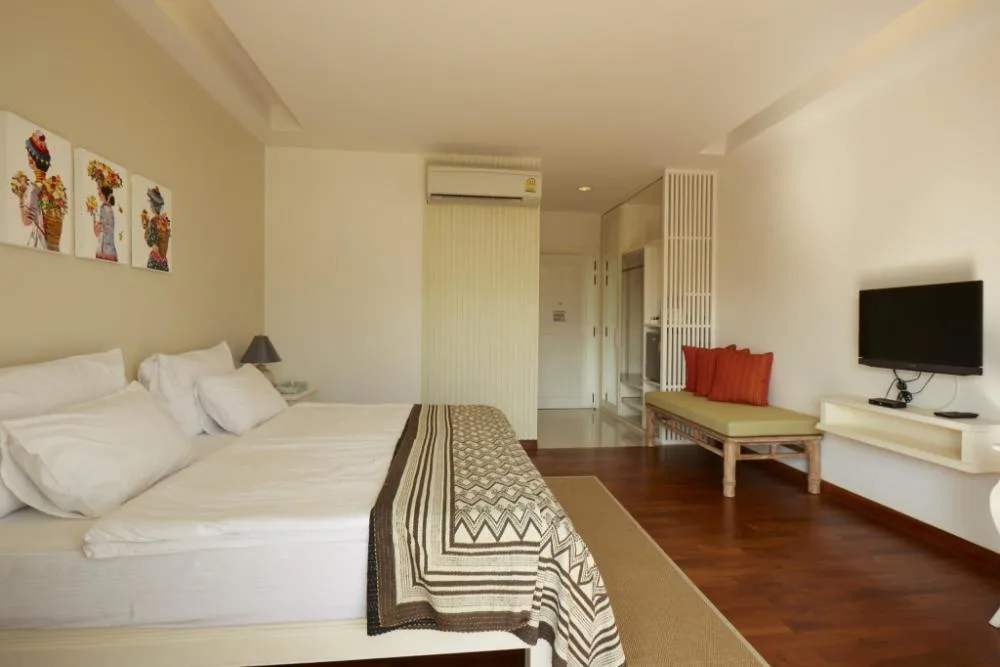
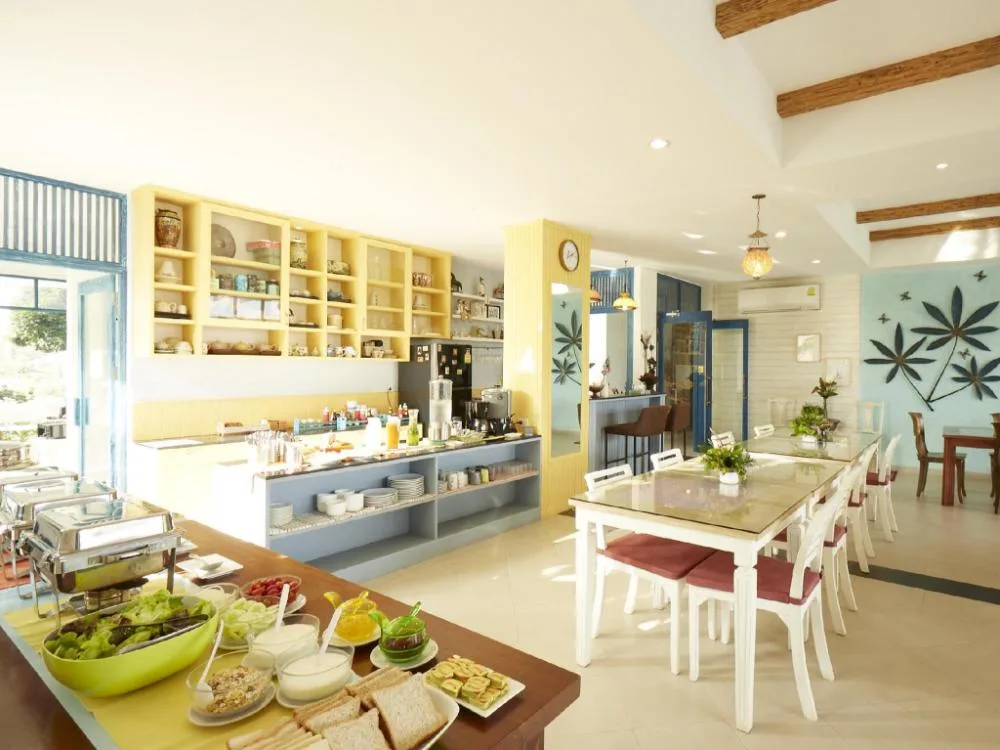
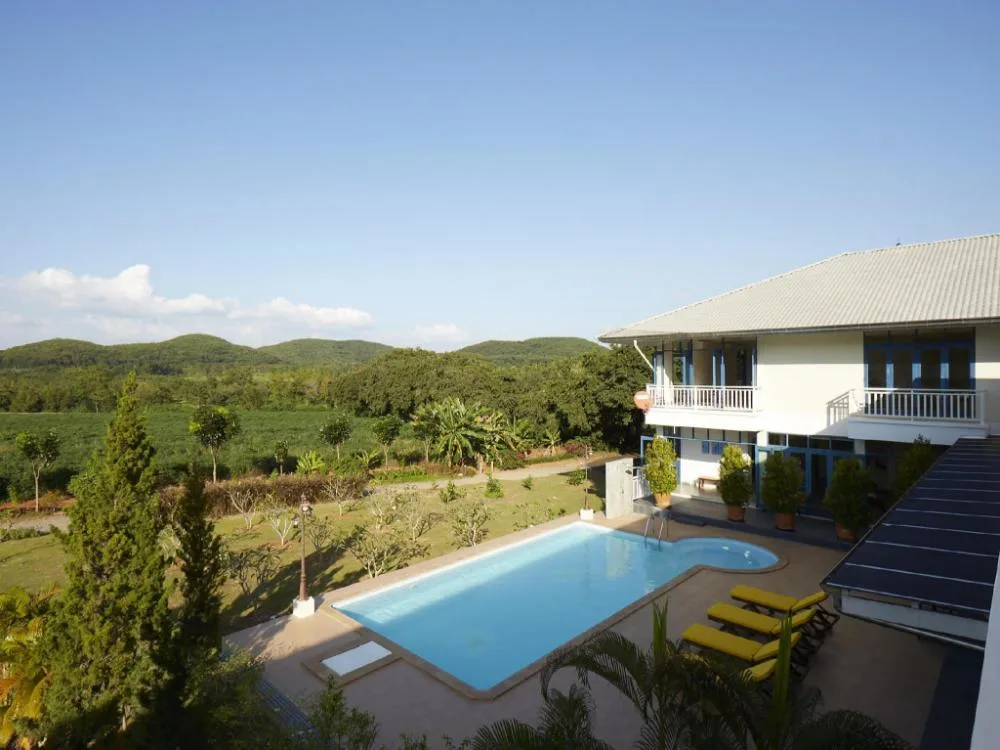
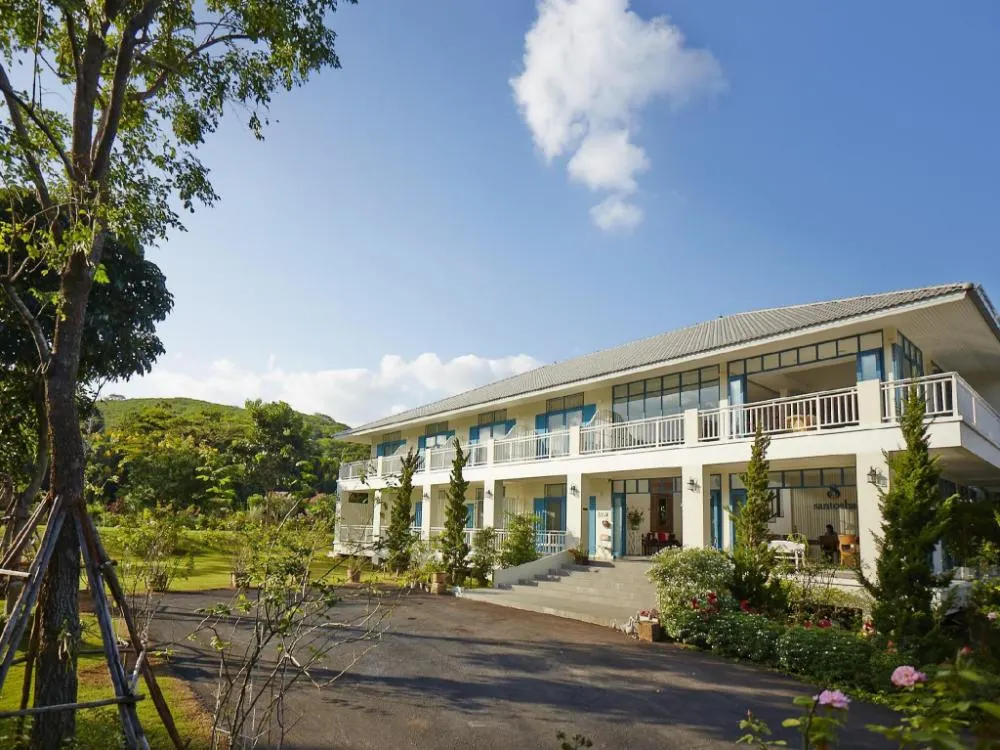
Accommodation is residential and included in the course fee. Rooms are clean, simple, and comfortable. Most participants stay in shared rooms, though private options may be available depending on availability.
The accommodation is within walking distance of the practice hall. This makes it easy to move between sessions without needing transportation.
The setting is quiet. Rooms are basic but functional, with air conditioning, clean bedding, and access to shared bathrooms or private facilities depending on the room type.
Included:
- 300 hours of instruction
- 27 nights accommodation
- Three vegetarian meals daily
- Course materials and manual
- Certification upon completion
- Airport transfers
- Access to teaching labs and practicum
Not Included:
- Flights to and from Thailand
- Travel insurance
- Visa fees
- Personal expenses
- Additional excursions or activities
Refund Policy
Deposits are non-refundable. If you cancel more than 60 days before the start date, you will receive a refund of tuition paid minus the deposit. Cancellations within 60 days of the start date are non-refundable.
If the training is cancelled by the school, you will receive a full refund or the option to transfer to a future date.
No refunds are given for early departure or partial attendance once the training has begun.
Practical Information
Nearest Airport: Suvarnabhumi International Airport (Bangkok) or Phuket International Airport, depending on training location. Specific location details are provided upon registration.
Arrival: Arrive one day before the training begins. Orientation takes place on the evening of Day 1.
Language: All instruction is in English. You must be able to understand and communicate in English.
Group Size: Maximum 20 participants. Small groups allow for individual attention and detailed feedback.
Study Expectations: Expect homework, reading assignments, and teaching preparation outside of scheduled hours. This is not passive attendance.
Pre-Course Requirements: Proof of 200-hour yoga teacher certification. Completed application form. Health questionnaire.
Code of Conduct
Professional behavior is required. This includes punctuality, full attendance, respectful engagement with teachers and peers, and adherence to the training schedule.
Alcohol and recreational substances are not permitted during the training period. This is a study environment, not a social retreat.
Respect for the space, the teachings, and the group process is expected. Disruptions, complaints, or refusal to participate undermine the learning environment for everyone.
You are responsible for your own practice and study. Teachers provide guidance, but the effort required to learn and integrate is your own.
Ethical conduct extends beyond the training. You are expected to maintain professional boundaries, practice honesty, and uphold the standards of a senior teacher both during and after the course.
S to this text in the module Advanced settings.
Location & How to Get There
Advait Yoga Meditation is located on the quieter side of Koh Samui, away from the main tourist areas. The exact location details will be provided upon registration.
How to Get to Koh Samui
By air: Fly into Koh Samui International Airport (USM). From there, arrange a taxi or private transfer to the course location. Travel time is approximately 20 to 30 minutes depending on traffic.
By ferry: If you arrive via Surat Thani Airport or prefer a more budget-friendly option, take a bus or taxi to the ferry terminal and board a ferry to Koh Samui. Ferries run regularly throughout the day. From the pier, arrange onward transport to the school.
Airport Transfer Information
Airport transfers can be arranged in advance for an additional fee. Contact the school at least one week before your arrival to coordinate pickup. Shared transfers may be available if multiple participants are arriving on the same day.
FAQ
Do I need a 200-hour certificate to join?
Yes. This is advanced training. You must have completed a 200-hour yoga teacher training from a recognized school. Proof of certification is required during application.
Is this course Yoga Alliance eligible?
Yes. Upon completion, you are eligible to register as a 500-hour Registered Yoga Teacher (RYT-500) with Yoga Alliance, provided your initial 200-hour training was also Yoga Alliance certified.
How intensive is the training?
Very. Days are long, beginning early and ending late. The schedule includes physical practice, classroom study, teaching labs, and personal study time. This is not a relaxed or recreational program.
Will there be teaching practice?
Yes. Teaching practice is central to the training. You will teach multiple times, receive feedback, and refine your approach throughout the 28 days.
Is prior teaching experience required?
No, but it is beneficial. If you have been teaching since your 200-hour training, you will have context for the advanced material. If you have not taught, expect a steeper learning curve.
Can I leave the premises during the training?
The training is residential and immersive. Leaving for personal excursions is discouraged and may affect your ability to complete requirements. One rest day per week allows personal time on-site.
What if I have dietary restrictions?
Three vegetarian meals are provided daily. Common dietary needs (vegan, gluten-free, allergies) can be accommodated with advance notice. Inform the school during registration.
What should I bring?
Yoga mat, props if you prefer your own, notebook, comfortable clothing for practice, casual clothes for downtime, any required medications, and personal toiletries. A detailed packing list is sent upon registration.
What is the age range of participants?
Participants typically range from late twenties to fifties, though age is less relevant than readiness and commitment.
Is this training physically demanding?
Yes. You will practice daily, often for extended periods. You do not need to be able to perform all advanced poses, but you should have a consistent personal practice and reasonable physical fitness.