
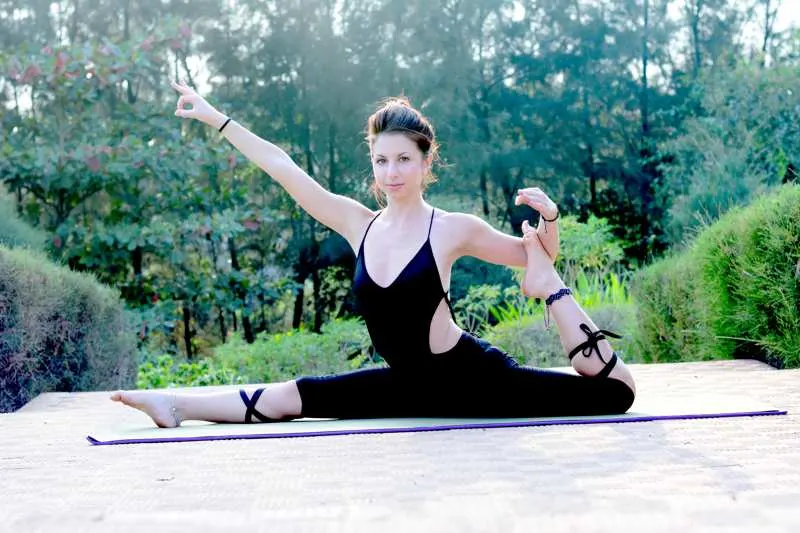
Yoga isn’t just stretching or doing poses on a mat. A lot of people see it as a workout or something to help them relax after a long day. And yes, it can do that. But yoga, at its core, goes much deeper.
In its original sense, yoga is a way of living. It’s about balance. About paying attention. About understanding yourself a little better, both inside and out. It was never meant to be only physical.
In this guide, you’ll get a clear idea of what yoga actually is, where it comes from, and why it was practiced in the first place. We’ll also look at how it supports the body, the mind, and the emotional side of life, without making it complicated or abstract. Whether you’re just curious or you’ve been practicing for a while, this is meant to give you a steady, down-to-earth understanding of yoga, rooted in tradition but relevant to how people live today.
What Is Yoga? Meaning & Definition
The word yoga comes from the Sanskrit root “yuj.” It simply means to join or connect.
1. At its heart, yoga is about a few very human things.
2. Bringing the body, breath, and mind into one place.
3. Finding some balance between what’s going on inside you and how you live in the world.
4. Feeling a sense of connection, rather than always feeling separate or scattered.
Yoga isn’t a religion. It doesn’t ask you to believe in anything. It’s more like a practical way of living. It was created to reduce suffering and help people live with more awareness, steadiness, and a bit of inner calm.
1. Put very simply, yoga helps you
2. understand yourself better,
3. notice how you live and react,
4. and create more harmony, both within yourself and in your everyday life.
Origin & History of Yoga
Yoga is one of the oldest ways people have tried to understand themselves. Its roots go back thousands of years in India, long before yoga became something taught in studios or gyms.
Yoga in the Indus Valley Civilization
Some of the earliest clues come from the Indus Valley Civilization, around 3000 BCE. Archaeologists found seals showing figures sitting in calm, steady postures that look a lot like meditation. There are no written explanations from that time, but these images hint that inner practices were already part of daily life.
Yoga in the Vedas
The first written mentions of yoga appear in the Vedas. Back then, yoga wasn’t about poses. It was connected to rituals, quiet contemplation, working with the breath, and learning self-discipline. The focus was more inward than physical.
Yoga in the Upanishads
Later, the Upanishads shifted things even more. The attention moved away from rituals and toward asking deeper questions. Who am I, really? What lasts, and what doesn’t? Yoga became a way to understand the self and see the deeper connection between all forms of life.
Patanjali and the Yoga Sutras
Sometime between 200 BCE and 400 CE, Patanjali organized these ideas into what we now know as the Yoga Sutras. He described yoga as the quieting of the mind’s constant movement. This simple but powerful idea still sits at the heart of classical yoga today.
Yoga Philosophy: The Eight Limbs of Yoga
Patanjali described yoga as an eight-limbed path, known as Ashtanga Yoga. These limbs guide practitioners toward a balanced and meaningful life.
1. Yama – Ethical Restraints
These are about how we deal with other people and the world around us.
Being kind and not causing harm.
Speaking honestly.
Not taking what isn’t yours.
Living with moderation.
Not clinging too tightly to things.
2. Niyama – Personal Observances
This part turns inward. It’s about how you treat yourself.
Keeping things clean, inside and out.
Learning contentment.
Putting in honest effort.
Self-reflection and self-study.
Letting go of control and trusting something bigger than the ego.
3. Asana – Physical Postures
Asanas weren’t created for fitness alone. They help the body sit comfortably, stay steady, and not become a distraction when the mind wants to go quiet.
4. Pranayama – Breath Control
Working with the breath to steady the nervous system, balance energy, and calm emotional ups and downs.
5. Pratyahara – Withdrawal of Senses
This is the point where attention slowly turns inward, instead of constantly reacting to noise, screens, and outside pulls.
6. Dharana – Concentration
Training the mind to stay with one thing, even for a short time, without drifting.
7. Dhyana – Meditation
When focus becomes natural and continuous, without force. Awareness flows without effort.
8. Samadhi – Absorption
A deep state of stillness where the sense of separation softens, and there’s a feeling of quiet unity.
These eight limbs were systematized by Patanjali, and together they form the backbone of classical yoga, not as rules to follow perfectly, but as a way to understand how a calm mind and a balanced life slowly grow.
Different Types of Yoga
Over time, yoga grew in different directions. People had different needs, different temperaments, different ways of relating to life. So different styles emerged. They look different on the surface, but underneath, they’re all pointing toward balance and awareness.
Hatha Yoga
This is slow and steady. It focuses on basic postures, breathing, and alignment. There’s time to feel what’s happening in the body. That’s why many beginners start here. It gives a solid foundation without rushing.
Vinyasa Yoga
Vinyasa is more fluid. Movement flows from one posture to the next, guided by the breath. It can feel rhythmic and alive. Over time, it builds strength, flexibility, and a kind of moving focus.
Ashtanga Yoga
Ashtanga follows a fixed sequence. The practice is structured and physically demanding. You repeat the same series, day after day. It builds discipline, stamina, and a strong relationship with consistency.
Kundalini Yoga
Kundalini works on a different level. The focus is on inner energy. Practices often include breathwork, chanting, and meditation. It can feel intense, sometimes emotional, and very inward.
Bhakti Yoga
Bhakti is the path of devotion. It’s about opening the heart. Chanting, prayer, and surrender are central here. It’s less about technique and more about feeling connected through love and trust.
Jnana Yoga
Jnana is the path of inquiry. It involves deep reflection and questioning. Who am I? What is real? It’s a quieter path, often rooted in study and contemplation.
Karma Yoga
Karma Yoga is about action. Doing your work fully, without being attached to the outcome. It’s practiced in everyday life, through service, responsibility, and showing up without ego.
Each of these paths offers a different doorway. People often move between them, or blend them naturally, as life changes and understanding deepens.
Benefits of Yoga
Yoga works on more than just the body. Over time, it starts to shape how you live, how you feel, and how you understand yourself. The changes aren’t loud or obvious. They’re quiet, almost easy to miss. But they grow, one day at a time.
Physical Benefits
With steady practice, the body begins to open and soften.
Flexibility improves, and posture often adjusts without much effort.
Muscles and joints feel stronger, yet more relaxed.Digestion tends to settle, immunity improves, and sleep becomes deeper and more natural.
Mental Benefits
The mind starts to slow down. Not suddenly, just gradually.
Stress and anxiety don’t disappear, but they feel easier to live with.
Focus improves. Thoughts feel less crowded. Reactions soften.
The nervous system remembers how to settle again.
Emotional Benefits
Yoga creates space to notice emotions without being pulled into them.
Awareness grows quietly, without force.
Emotions feel more balanced and less heavy.
During difficult moments, there’s more resilience, and relationships often feel steadier and more honest.
Spiritual Benefits
With time, a gentle sense of inner peace begins to appear.
Life feels a bit more meaningful, even in ordinary moments.
There’s less clinging to the ego and more connection to something deeper.
Not in a dramatic way, just a clearer sense of life and your place within it.
Yoga in Modern Life
In today’s fast-paced world, yoga is more relevant than ever.
Modern challenges yoga helps with:
-
Work stress and burnout
-
Anxiety and overthinking
-
Poor lifestyle habits
-
Digital overload
Yoga offers simple tools to pause, breathe, and reconnect—no matter how busy life gets.
Who Can Practice Yoga?
Yoga is for everyone, regardless of:
-
Age
-
Gender
-
Fitness level
-
Background
You do not need flexibility, strength, or prior experience. Yoga adapts to the individual—not the other way around.
How to Start Yoga: Beginner Tips
If you’re new to yoga, start gently.
Helpful tips:
-
Begin with simple postures
-
Focus on breathing, not perfection
-
Practice consistently, even 20 minutes
-
Learn from qualified teachers
-
Be patient with yourself
Internal links you may explore:
-
Yoga teacher training programs
-
Meditation retreats
-
Pranayama and breathwork courses
Why Learn Yoga at Advait Yoga Meditation
At Advait Yoga Meditation, yoga is taught as a whole system, not just something you do with the body.
The approach stays simple and grounded.
Traditional yogic philosophy is respected, but it’s explained in a way that actually makes sense in daily life.
There’s real attention on how yoga carries off the mat and into everyday moments.
Practices are taught carefully and mindfully, without pushing or rushing.
Classes stay small, so learning feels personal and lived, not distant or mechanical.
Whether someone comes for teacher training, a meditation program, or a retreat, the intention doesn’t change. The focus stays on honest learning and steady personal growth, not just collecting techniques or certificates.
Conclusion: Yoga as a Way of Life
Yoga isn’t something you practice for an hour and then leave behind. It slowly weaves its way into how you breathe, how you think, how you respond, and how you move through your day.
When you start to understand yoga in its deeper sense, life naturally feels more balanced and aware. Not perfect. Just a little more steady and clear.
And if you feel curious to explore yoga beyond the mat, learning in a space that feels supportive and genuine really does matter. It can change how the practice settles into your life, quietly and in its own time.
FAQs: What Is Yoga?
1. What is yoga in simple words?
Yoga is a practice that helps connect the body, breath, and mind to live with balance and awareness.
2. Is yoga only physical exercise?
No. Yoga includes philosophy, breathing, meditation, ethics, and lifestyle practices—not just postures.
3. Can beginners practice yoga?
Yes. Yoga is suitable for beginners and can be adapted to any level.
4. How often should I practice yoga?
Even 3–5 times a week can bring noticeable benefits when practiced consistently.
5. What is the main goal of yoga?
The main goal of yoga is inner balance, self-awareness, and freedom from suffering.