
Introduction
A 200 hour yoga teacher training in Thailand offers structured immersion in the foundations of practice and instruction. This is not a weekend workshop or shortened intensive. Twenty-three days allows time to absorb material, practice teaching, adjust understanding, and develop the capacity to hold space for others.
The training takes place in a residential setting where daily responsibilities fall away. You wake, practice, study, teach, rest, and repeat. The rhythm is simple. The environment supports focus. Thailand provides distance from familiar routines and a climate that allows morning practice outdoors when conditions permit.
This course covers foundational asana across multiple styles, alignment principles, anatomy and physiology, classical yoga philosophy, pranayama practice, meditation training, and teaching methodology. The certification meets Yoga Alliance standards and prepares participants to register as RYT-200 upon completion.
Advait Yoga Meditation approaches teacher training as skill development grounded in traditional study. The emphasis is on clarity, safety, and the capacity to guide practice with awareness. This is technical training. It requires attention, discipline, and willingness to examine how you practice and why.
Who This Training Is For
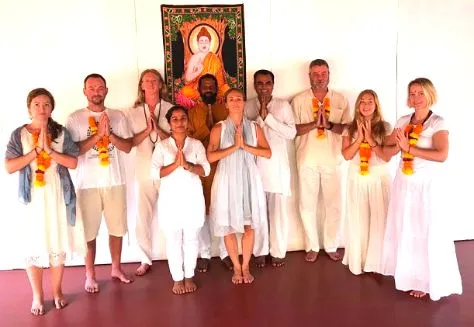
This training suits beginners who want structured study from the start. Many participants have practiced yoga for a year or two and recognize they need proper foundation before going further. Some come to deepen their own practice without immediate plans to teach. Others know they want to instruct and understand that teaching requires different skills than practicing.
The course works well for people seeking disciplined immersion. If you practice occasionally at home or drop into studio classes when schedules allow, this environment offers a different kind of engagement. Daily practice, consistent instruction, and repeated exposure to core material build understanding that scattered study cannot.
This is not performance training. No one is asked to demonstrate advanced poses or adopt a particular teaching personality. The work involves learning alignment principles, understanding anatomy as it relates to movement, studying foundational texts, and developing the ability to observe students clearly. It suits people who prefer substance over style and who value precision in instruction.
Some participants arrive uncertain whether they will teach afterward. That is reasonable. Completing a 200 hour yoga teacher training in Thailand provides tools for personal practice regardless of future teaching plans. The training clarifies how asana works, why sequencing matters, and how breath relates to nervous system regulation. These elements serve anyone who practices.
Why a 200 Hour Yoga Teacher Training in Thailand
The 200 hour standard exists because foundational training requires time. A weekend does not suffice. A week introduces concepts but does not develop competence. Two hundred hours allows repeated practice, observation, correction, and integration.
Immersive learning supports retention in ways that part-time study struggles to match. When you practice daily, study anatomy in the afternoon, teach a short sequence in the evening, then meditate before rest, the material connects. You notice how morning asana affects energy levels during philosophy study. You observe how pranayama practice influences meditation capacity. These relationships become clear through sustained engagement rather than intellectual understanding alone.
Practicing yoga and teaching yoga are different skills. Personal practice focuses inward. Teaching requires outward attention—observing alignment, recognizing compensatory patterns, adjusting verbal cues based on student response, managing group energy, and maintaining safety. A 200 hour yoga TTC Thailand program develops these skills through repetition and feedback.
Retreat-style residential training removes distractions that fragment attention in daily life. There are no work emails to check, no errands to run, no social obligations pulling focus elsewhere. You are in one place, doing one thing, for a defined period. This simplicity allows depth that scattered effort cannot achieve.
Environment affects learning more than most people recognize. A space designed for focused study, surrounded by others engaged in the same work, creates conditions where attention naturally settles. Thailand's warm climate, coastal or island settings, and slower rhythm support this process without requiring effort.
Why Thailand
Thailand offers practical advantages for intensive study. The warm climate allows outdoor morning practice when weather permits. Ocean or natural surroundings provide visual space that supports mental clarity. Many retreat centers are located away from urban areas, reducing ambient noise and distraction.
The slower rhythm in coastal or island communities contrasts with the pace of most urban environments. Markets open early, quiet settles by evening, and daily life follows natural cycles. This rhythm supports the training schedule rather than working against it.
Distance from daily responsibilities matters. When you remain in your home environment, familiar concerns persist. Work situations, family dynamics, and social obligations continue to pull attention even when you set boundaries. Physical distance creates psychological space that allows full participation in the training.
Simplicity in surroundings supports focus. Retreat centers in Thailand typically offer clean, functional accommodation without excess. Rooms are basic, meals are prepared, and facilities are maintained. There is little to manage beyond your own participation in the program. This reduction of choice and responsibility frees mental energy for learning.
The environment is not a tourism attraction. Participants are not sightseeing or sampling local culture as a primary activity. The focus remains on study, practice, and skill development. Thailand provides the container, but the work is internal and technical.

What You Will Learn
Foundational Asana (Hatha & Multi-Style)
The training covers core standing poses, seated poses, forward bends, backbends, twists, and inversions. You learn classical Hatha yoga postures and their variations within alignment-based Vinyasa sequencing. Each pose is examined for structural principles, common misalignments, and appropriate modifications.
Instruction includes breakdown of foundational shapes: how the pelvis tilts, where the spine flexes and extends, how shoulder mechanics affect arm positions, and how foot and ankle alignment influences the entire leg. This level of detail supports safe teaching and helps you recognize compensatory patterns in students.
Multi-style exposure means learning how different traditions approach the same poses. You study both static holds and flowing sequences, understanding when each serves practice and how to teach both effectively.
Alignment & Adjustment Principles
Alignment training focuses on skeletal relationships and joint safety. You learn to observe postural patterns, identify misalignment before it causes strain, and offer verbal cues that help students self-correct. Physical adjustments are taught with emphasis on consent, clarity of intention, and respect for individual structure.
The work involves understanding that bodies vary. What works for one student may not suit another. You develop the skill to modify poses based on proportion, flexibility, strength, and injury history. This requires observation and responsiveness rather than formulaic instruction.
Adjustment techniques are practiced extensively. You learn where to place hands, how much pressure to apply, and when to refrain from touching. The training emphasizes that adjustments serve the student's understanding, not the teacher's preference for how a pose should look.
Anatomy & Physiology
Anatomy study covers the skeletal system, major muscle groups, joint mechanics, and connective tissue. You learn bone names, muscle actions, and how these relate to asana practice. The material is practical rather than theoretical—focused on what teachers need to understand in order to guide movement safely.
Physiology training includes basic cardiovascular and respiratory function, nervous system regulation, and the relationship between breath and physiological state. You study how pranayama affects these systems and why certain practices calm while others energize.
The course does not require medical background. Material is presented clearly with visual aids, models, and direct application to yoga practice. You learn enough to teach responsibly and recognize when students should consult medical professionals.
Yoga Philosophy (Classical Texts & Practical Understanding)
Philosophy study covers the Yoga Sutras of Patanjali, Bhagavad Gita selections, and foundational concepts from Hatha Yoga Pradipika. Texts are approached as practical guides rather than religious scripture. Discussion focuses on how classical teachings relate to modern practice and teaching.
You examine the eight limbs of yoga, understanding yamas and niyamas as ethical guidelines that support teaching relationships. The training explores concepts of practice, detachment, and the mind's tendencies as Patanjali describes them. This material informs how you teach, not just what you know intellectually.
Philosophy sessions include discussion and reflection. You are encouraged to question, disagree, and explore how teachings apply to contemporary life. The approach values understanding over memorization.
Pranayama Foundations
Pranayama training begins with breath awareness and natural breathing patterns. You learn foundational techniques including ujjayi, nadi shodhana, kapalabhati, and bhramari. Each practice is examined for its effects on the nervous system and appropriate contexts for teaching.
The course emphasizes that pranayama is not merely breathing exercises but a system for working with energy and attention. You practice daily, observe your own responses, and learn to guide others with awareness of individual capacity and contraindications.
Safety protocols are taught clearly. You learn which practices suit beginners, which require established practice, and when to avoid certain techniques based on health conditions or emotional state.
Meditation Practice
Meditation training includes seated practice, body scan techniques, breath awareness, and introduction to mindfulness methods. You meditate daily and learn to guide short sessions for students.
The approach is practical. You learn how to sit comfortably, what to do when attention wanders, and how to work with resistance or restlessness. Instruction addresses common difficulties and offers strategies for establishing consistent practice.
Teaching methodology for meditation covers pacing, language, and how to create supportive conditions for group practice. You practice guiding meditation for peers and receive feedback on clarity and timing.
Teaching Methodology
Teaching methodology covers class planning, sequencing principles, time management, and verbal instruction. You learn how to structure a coherent class, pace transitions, and offer modifications for mixed-level groups.
The training includes extensive practice teaching. You plan short sequences, teach them to small groups, and receive feedback on clarity, safety, and effectiveness. This repetition builds confidence and reveals areas needing improvement.
Instruction covers voice use, demonstration versus verbal cueing, how to position yourself in a room for clear observation, and how to manage challenging situations. These are technical skills developed through practice rather than innate qualities.
Sequencing & Class Structuring
Sequencing training teaches how to build a class that prepares the body appropriately for peak poses, balances effort and ease, and integrates counterposes logically. You learn warm-up principles, how to progress from simple to complex movements, and when to emphasize strength versus flexibility.
The course covers different class formats: gentle practice, alignment-focused classes, flow sequences, and restorative approaches. You learn to recognize which structure suits different student populations and teaching contexts.
Practical assignments require creating sequences for specific intentions—hip opening, shoulder mobility, backbending, stress reduction—and teaching these to peers for feedback.
Ethics & Professional Responsibility
Ethics training addresses boundaries, consent, scope of practice, and professional conduct. You learn what constitutes appropriate teacher-student relationships and how to recognize when personal issues interfere with teaching capacity.
The course covers consent in adjustments, language around body image, inclusivity in teaching, and how to refer students to appropriate healthcare providers when practice alone does not address their needs.
Discussion includes the business of teaching: fair pricing, honoring commitments, continuing education, and maintaining liability insurance. These are practical considerations that affect long-term sustainability as a teacher.
Introduction to Holding Space
Holding space means maintaining calm, clear presence while guiding others through practice. This skill involves managing your own nervous system, staying responsive to group energy, and offering steady direction without controlling student experience.
Training includes observation of how teachers create safety through consistency, appropriate boundaries, and non-reactive presence. You practice leading short sessions while maintaining awareness of both individual students and overall group dynamics.
This is perhaps the most subtle skill taught. It develops through repetition, feedback, and willingness to notice when you become reactive or overly controlling. The training introduces these concepts; mastery develops through years of teaching.
Daily Schedule
| Time | Activity |
|---|---|
| 6:00 AM | Wakeup |
| 7:30 - 9:00 AM | Asana Practice |
| 9:00 - 10:00 AM | Breakfast |
| 10:00 - 11:45 AM | Teaching Methodology |
| 11:45 AM - 1 PM | Yoga Phylosophy |
| 1:00 - 2:00 PM | Lunch |
| 2:30 - 4:00 PM | Anatomy |
| 4:00 - 5:45 PM | Asana Practice |
| 6:00 - 7:00 PM | Meditation |
| 7 : 30 PM | Dinner |
Please Note: This daily schedule is sample schedule and can be changed during TTC.
Teaching Approach at Advait Yoga Meditation
Advait Yoga Meditation approaches teacher training through experience-based instruction. Teachers draw from years of practice and teaching rather than following predetermined scripts. This means sessions adapt to participant needs, questions receive thorough response, and difficult concepts are approached from multiple angles until understanding clarifies.
Small group attention allows individualized feedback. With limited enrollment, instructors observe each participant's practice, review teaching assignments personally, and offer specific guidance for improvement. You are not lost in a large group or left to figure out alignment on your own.
The training maintains traditional roots while offering modern clarity. Classical texts are studied, pranayama follows established lineages, and meditation draws from time-tested methods. Instruction is delivered in plain language without esoteric terminology that obscures meaning. The goal is understanding, not mystique.
Alignment and safety receive consistent emphasis. Every pose is taught with attention to joint health, appropriate muscle engagement, and recognition of individual variation. Participants learn to teach safely before learning to teach creatively.
The teaching prioritizes presence over personality. Effective instruction does not require charisma or performance. It requires clear observation, accurate cueing, and steady attention to student safety and comprehension. This approach suits people uncomfortable with performative teaching styles.
Accommodation




Accommodation is residential and included in the course fee. Rooms are clean, simple, and comfortable. Most participants stay in shared rooms, though private options may be available depending on availability.
The accommodation is within walking distance of the practice hall. This makes it easy to move between sessions without needing transportation.
The setting is quiet. Rooms are basic but functional, with air conditioning, clean bedding, and access to shared bathrooms or private facilities depending on the room type.
Included:
- 200 hours of instruction and practice
- 23 nights accommodation
- Three vegetarian meals daily
- Training manual and materials
- Yoga Alliance certification upon successful completion
- Use of yoga props and equipment
Not Included:
- Flights to and from Thailand
- Travel insurance
- Airport transfers
- Personal expenses
- Additional excursions or activities
- Visa fees if applicable
Refund Policy
Full refund minus 20% administrative fee if canceled more than 60 days before the start date. Fifty percent refund if canceled 30–60 days before the start date. No refund for cancellations less than 30 days before the start date.
In the event that Advait Yoga Meditation cancels the training, participants receive a full refund or the option to transfer to a future training date. Medical emergencies requiring cancellation are reviewed individually. Documentation from a medical provider is required for consideration.
Transfers to future training dates are permitted up to 45 days before the scheduled start date. One transfer is allowed without penalty. Subsequent transfers incur a fee.
Practical Information
Nearest Airport: Surat Thani International Airport (URT) or Koh Samui Airport (USM), depending on the specific training location. Exact location details are provided upon registration.
Arrival Guidance: Participants should arrive the day before the training begins. This allows time to settle into accommodation, adjust to time zone changes, and attend the orientation session held on the evening before the first day.
Language of Instruction: All sessions are conducted in English. Participants should be comfortable understanding spoken English and reading written materials in English.
Group Size: Maximum 20 participants. Small enrollment ensures individual attention and sufficient space for practice teaching without overcrowding.
Daily Expectations: Attendance at all scheduled sessions is required unless illness or injury prevents participation. Participants are expected to maintain the daily schedule, observe quiet hours, and respect shared spaces. Personal practice, study time, and rest are individual responsibilities.
What to Bring: Comfortable clothing for yoga practice, notebook for taking notes, water bottle, any personal medications, sunscreen, insect repellent, and toiletries. Yoga mats and props are provided, though participants may bring their own mat if preferred.
Code of Conduct
Respect for others is non-negotiable. This includes punctuality, maintaining quiet during designated hours, cleaning up after yourself in shared spaces, and honoring personal boundaries.
Attendance at all sessions is required. If illness or injury prevents participation, inform instructors immediately. Chronic absence affects certification eligibility.
Discipline supports the training structure. This means practicing when scheduled, completing assignments on time, and maintaining focus during sessions. Personal discipline creates the conditions where learning happens.
Boundaries include appropriate teacher-student relationships, consent before physical adjustments, and respectful communication during disagreements or challenges. Harassment, discrimination, or aggressive behavior results in removal from the program without refund.
Professional responsibility begins during training. Participants are training to teach, which carries ethical obligations. This includes honest self-assessment, acknowledging limitations, and committing to continued learning beyond the initial certification.
The code of conduct exists to protect the learning environment and ensure safety for all participants. Violations are addressed directly, and repeated issues result in dismissal from the program.
Location & How to Get There
The training takes place at a coastal retreat center in Thailand. Exact location details are provided upon registration, as the specific venue may vary by training date.
From Surat Thani Airport: Take a ferry or speedboat to the island. Journey time is approximately two to three hours depending on the type of boat service selected. Pre-arrange transportation with the retreat center for pickup from the pier.
From Koh Samui Airport: Depending on the final location, transport may involve a short taxi ride, ferry crossing, or direct transfer to the retreat center. Specific instructions are provided based on the training venue.
Visa Requirements: Many nationalities receive visa exemption for stays up to 30 days when entering Thailand. Verify current requirements based on your passport. If the training period plus travel days exceeds your visa exemption, apply for a tourist visa before departure.
Travel Insurance: Arrange comprehensive travel insurance that covers medical emergencies, trip cancellation, and personal belongings. Verify that yoga practice is not excluded from coverage.
Currency: Thai Baht (THB). ATMs are available in nearby towns. Credit cards are accepted in some locations but not universally. Bring sufficient cash for personal expenses.
FAQ
Is this course suitable for beginners?
Yes. The training is designed to accommodate participants with varying levels of experience. Many students arrive with one to two years of regular practice. The curriculum starts with foundational material and builds progressively. If you can maintain a basic yoga practice and are willing to learn, you can complete the training.
Will I receive certification?
Upon successful completion of all required hours, assignments, and assessments, you receive a 200-hour yoga teacher training certificate from Advait Yoga Meditation. This certificate allows you to register with Yoga Alliance as RYT-200, provided you meet Yoga Alliance membership requirements.
Can I teach after completing this training?
The certification qualifies you to teach foundational yoga classes. Whether you are ready to teach depends on your comfort with the material, practice teaching experience gained during the course, and willingness to continue learning. Many graduates begin by teaching friends, small community classes, or assisting more experienced teachers before leading independent classes.
Is prior teaching experience required?
No. The training assumes no prior teaching experience. All teaching skills are developed during the course through instruction, practice, and feedback.
How physically demanding is the training?
Daily asana practice requires sustained physical engagement, but the training is not designed to push physical limits. The focus is learning to practice and teach safely rather than achieving advanced poses. Participants should be free from injury that prevents regular yoga practice. If you have specific health concerns, discuss these with the training coordinators before registering.
What if I need to leave the training early?
Early departure affects certification eligibility, as completion requires attendance for all 200 hours. If emergency circumstances require early departure, contact the training coordinators immediately to discuss options. Partial completion does not result in certification.
Are meals provided for dietary restrictions?
Meals are vegetarian. Common dietary restrictions such as vegan, gluten-free, or food allergies can typically be accommodated with advance notice. Inform the retreat center of specific needs when registering.
What happens if I fail an assessment?
Assessments include written exams, teaching practicums, and demonstration of asana understanding. If you do not pass an initial assessment, you receive feedback and opportunity to retake the assessment. The training aims for competence, not failure. Most participants who attend fully and engage sincerely complete successfully.
Can I register for multiple trainings?
Once you complete a 200 hour yoga teacher training in Thailand or elsewhere, you may pursue additional certifications such as 300-hour advanced training, specialized workshops, or other continuing education. Completing the same 200-hour training twice does not provide additional certification credit.