
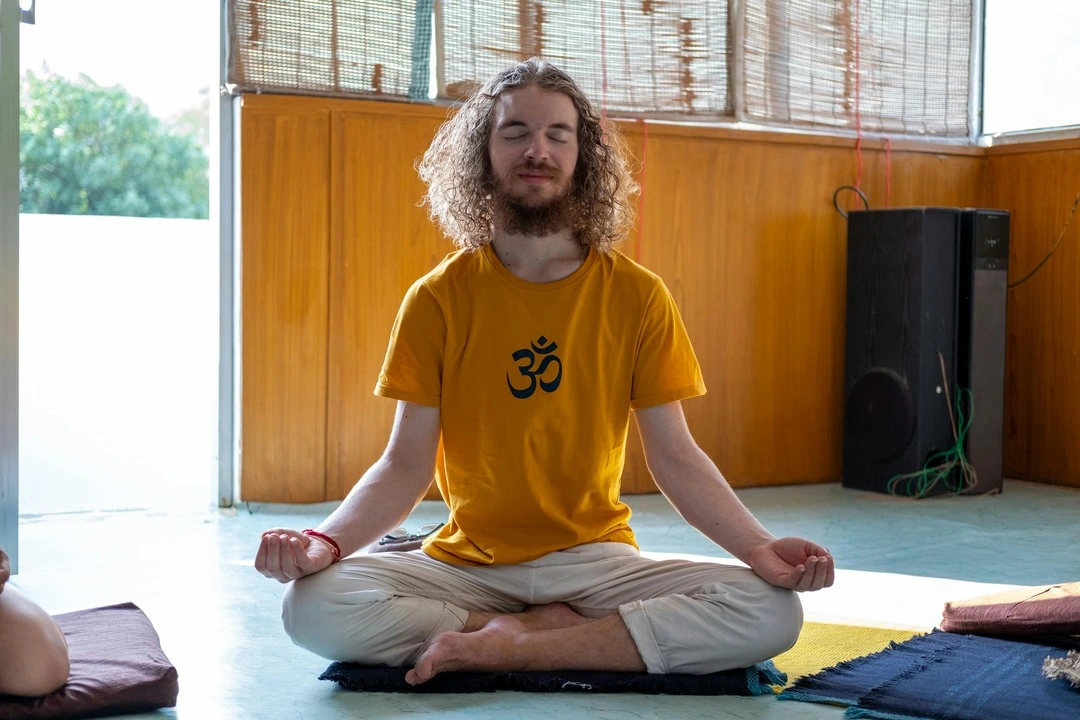
The question comes up often in teacher training. Students ask about the difference between yoga and meditation as if there's a clean line between them. As if one stops and the other begins.
The confusion is understandable. In studios, meditation happens after asana. In apps, they're listed side by side. In conversations, people say "yoga and meditation" as a paired phrase, like bread and butter.
But understanding the actual relationship changes how you practice. And if you're teaching, it changes what you're pointing students toward.
This isn't about definitions from textbooks. It's about what emerges when you've practiced both long enough to notice where they touch and where they diverge.
Why Yoga and Meditation Are Often Seen as the Same
Modern usage has compressed them into a single wellness category.
Walk into most studios and you'll see: yoga class from 6 to 7, meditation from 7:15 to 7:30. The structure suggests they're different activities done in sequence. Related, but separate. Like stretching before running.
Apps do the same thing. One section for yoga flows. Another for guided meditations. The interface teaches people to think of them as parallel practices with similar benefits.
In casual conversation, people use them almost interchangeably. "I do yoga and meditation" often means "I go to yoga class" or "I sit quietly sometimes." The language has merged.
This happened gradually. As yoga moved into Western culture, the physical practice became the most visible part. Asana was easier to photograph, easier to class-ify, easier to sell. Meditation came along as the calm-down portion, the Savasana extension, the part where you close your eyes and try not to think.
The dilution isn't malicious. It's what happens when complex practices meet mass adoption. Edges soften. Nuance drops away. Things get simpler so more people can access them.
But something is lost in that simplification.
When yoga and meditation collapse into the same category, students miss the architecture of the practice. They miss how one prepares for the other. How yoga creates conditions, and meditation is what arises within those conditions.
Teachers training new teachers inherit this confusion. They arrive at training thinking they already understand both because they've done sun salutations and sat in silence. Then practice deepens and they realize they've been operating with incomplete maps.
Yoga as a Complete Path, Not Just Physical Practice
Yoga is not asana with a Sanskrit name attached.
Asana is one part. Important, but not whole. The physical practice creates body awareness, yes. It builds strength and flexibility, yes. But those are side effects of something larger.
Yoga Beyond Asana
The eight limbs aren't a checklist. They're dimensions of practice that exist simultaneously. Yama and niyama aren't moral rules—they're observations about how to live without creating unnecessary friction. Pranayama isn't breathing exercises—it's learning to work with the energy that moves through breath.
Pratyahara, the withdrawal of senses, isn't about shutting the world out. It's about noticing where your attention habitually goes and developing the capacity to direct it.
Dharana, concentration, isn't forcing focus. It's what becomes possible when you've trained attention gently, over time, with breath and body as the training ground.
These aren't levels you complete. They're aspects that deepen together. Your asana practice informs your concentration. Your ethical awareness shifts your physical practice. Everything touches everything else.
Daily Discipline and Awareness
Yoga asks for consistency more than intensity.
It's the practice you do when you don't feel like practicing. When your body is stiff. When your mind is scattered. When nothing feels particularly transcendent.
The discipline isn't about toughness. It's about showing up to the mat the same way you show up to your life—honestly, without inflation or avoidance.
Over time, this builds something. Not flexibility or strength, though those come. It builds capacity to be present with what is, rather than what you wish were happening.
Relationship to Self, Others, and Life
Yoga changes how you relate to discomfort. To difficulty. To the space between effort and ease.
You learn this in asana first. How to breathe into resistance. How to recognize when you're pushing past wisdom. How to find stability in poses that feel unstable.
But the learning isn't contained in the physical practice. It transfers. The patience you develop holding a difficult pose becomes available in difficult conversations. The awareness you bring to alignment becomes available in how you structure your days.
This is yoga as practice, not as exercise. As a way of being, not a thing you do for an hour.
Meditation as a State, Not a Method
Meditation gets taught as if it's something you do. Sit down, close your eyes, follow these steps, achieve the state.
But meditation is the state. Not the method.
All the techniques—breath counting, mantra, body scanning, visualization—are approaches toward meditation. They're not meditation itself.
This distinction matters tremendously.
When you think meditation is the technique, you judge your practice by how well you execute the method. Did I count breaths correctly? Did I stay with the mantra? Did I stop my thoughts?
This creates strain. You're trying to meditate, which is itself a form of doing, and meditation is what happens when doing dissolves.
Why Effort Can Become a Barrier
Early practice requires effort. You sit even when sitting feels uncomfortable. You return attention to breath even when it keeps wandering. You create structure because without structure, nothing happens.
But there's a transition point. The effort that was necessary becomes the obstacle. You're working so hard to meditate that you can't settle into the state you're working toward.
Teachers see this often in students who are very disciplined. They're excellent at the form. They sit perfectly. They follow instructions precisely. But nothing deepens because they're holding everything together through will.
The invitation then is toward less doing, not more. Toward allowing rather than achieving. This is difficult to teach because it sounds like giving up, and it's not. It's a different quality of attention entirely.
Stillness as Something That Ripens
You can't force stillness. You can create conditions where stillness might arise.
This is why yoga prepares for meditation. The physical practice addresses the body's need to move. Pranayama settles the nervous system. Pratyahara reduces external pull.
But even with perfect conditions, meditation may not come. It ripens in its own time. Some days the mind settles immediately. Other days it doesn't, despite identical preparation.
This unpredictability is part of the practice. Learning to sit through the days when nothing happens. When meditation remains technique and never becomes state.
How Yoga Prepares the Body and Mind for Meditation
The relationship is practical, not theoretical.
Sitting still is uncomfortable if the body isn't prepared. Not uncomfortable as in challenging—uncomfortable as in the body creates so much noise that attention can't settle.
Asana addresses this directly. Not through marathons of practice, but through consistent attention to how the body holds and releases tension. Through learning what your hip flexors do when you've been sitting all day. Through discovering where your breath gets stuck when you're stressed.
Movement and Stillness
Movement teaches stillness by contrast.
When you flow through asana, you feel the body in motion. You notice where movement is smooth and where it catches. You discover the difference between moving from will and moving from breath.
Then you stop moving. The stillness has texture now. It's not empty—it's full of sensation, full of settling, full of the body finding its neutral.
This is the stillness you sit in for meditation. Not the stillness of a statue, but the stillness of a body that's been heard.
Breath and Awareness
Pranayama bridges body and mind.
Breath is both voluntary and involuntary. You can control it, but it also happens without you. This makes it a perfect object for attention—concrete enough to hold, subtle enough to develop sensitivity.
Working with breath over time changes your relationship to control. You learn to guide without gripping. To influence without dominating. These are the same qualities needed for meditation.
When attention wanders during meditation, you return to breath the way you've practiced returning hundreds of times during pranayama. Not as a technique you learned once, but as a pathway worn smooth through repetition.
Structure and Surrender
Yoga's structure creates safety for surrender.
You follow a sequence. You hold poses for specific durations. You move with intention and pattern. This structure contains the practice, gives it shape.
Within that structure, you learn to soften. To let effort be appropriate rather than excessive. To find the place where you're engaged but not rigid.
This balance—structure and surrender—is what meditation requires. You sit in a specific way, at a specific time, with specific form. And within that container, you allow whatever arises.
Where Yoga Ends and Meditation Begins (If It Does)
The classical texts name meditation as part of yoga. Dhyana is the seventh limb. It's not separate from yoga—it's where yoga is pointing.
But in practice, the boundary blurs.
There are moments in asana when the mind becomes quiet without trying. When you're in a pose and suddenly there's no commentary. No judgment. Just presence with what's happening. Is that meditation? Or is that yoga becoming meditative?
There are moments in seated practice when body awareness becomes so refined that it feels like asana without movement. You're adjusting the spine subtly. Releasing the jaw. Softening the belly. Is that meditation? Or is that yoga continuing in stillness?
The distinction might not matter except in how we teach and practice. If you think they're completely separate, you might practice them separately, missing how they inform each other. If you think they're identical, you might never develop the specific skills each requires.
Perhaps it's more useful to think of yoga as the complete practice, and meditation as one of its destinations. Asana, pranayama, ethical awareness, sense withdrawal, concentration—these all support and prepare for meditation. But they're also valuable on their own terms.
Meditation can exist without yoga. People meditate from many traditions, many approaches. But yoga as a system recognizes that most people need preparation. That jumping straight to seated meditation without addressing the body, the breath, the senses, the scattered mind—it's possible, but it's harder.
Common Misunderstandings Students Bring Into Teacher Training
Asana Equals Yoga
This is the most common. Students arrive having done yoga classes for years. They're strong in poses. They know alignment. They've memorized sequences.
Then training begins and they encounter philosophy, subtle body, ethics, meditation. The realization that yoga is broader than they understood can be disorienting.
Some students resist this. They want to teach what they know—the physical practice. They're not interested in the rest.
Others experience relief. They've been sensing there was something more, but the classes they attended didn't go there. Training gives language and framework to what they've been feeling.
Meditation Equals Silence
Students think meditation is the absence of thought. So they sit and try to stop thinking, then judge themselves when thoughts continue.
This misunderstanding creates suffering. They're failing at something impossible, then believing they're bad at meditation because they can't achieve the impossible.
Meditation is not the absence of thought. It's a different relationship to thought. Where thoughts arise and pass without hooking attention. Where you notice thinking without becoming the thinking.
This takes time to understand experientially. Telling someone doesn't convey it. They have to sit enough to feel the difference between being lost in thought and watching thought.
Progress Equals Experience
Western students especially bring goal orientation to practice. They want to know if they're advancing. They compare today's practice to yesterday's. They expect linear improvement.
But practice doesn't work that way. Some days are quieter than others for no discernible reason. Some months feel like regression. Years later, something finally makes sense that was taught in week one.
Progress in yoga and meditation isn't accumulation. It's not about having more peak experiences. It's about deepening capacity to be present with whatever arises—pleasant, unpleasant, or neutral.
Why This Distinction Matters for Yoga Teachers
Responsibility in Teaching
When you teach asana, you're teaching poses. When you teach yoga, you're working with the whole person.
Understanding that meditation is part of the yogic path—not an add-on, not a separate practice—changes how you sequence classes, how you speak, how you create space.
You're not just leading people through movements. You're creating conditions where they might touch something deeper. Where the physical practice becomes a doorway rather than a destination.
Language and Guidance
The words you choose matter.
If you constantly use meditation and yoga interchangeably, you reinforce confusion. If you speak about meditation as something to achieve, you create striving.
Teachers who understand the distinction can guide students more skillfully. They can explain why Savasana isn't meditation, even though it's meditative. Why breath work is preparation for meditation, not meditation itself. Why concentration practices build capacity without being the final state.
Holding Space Without Over-Directing
The teacher's role in meditation is different than in asana.
In asana, you instruct. You cue alignment. You offer adjustments. You're actively teaching form.
In meditation, you create container. You invite. You hold silence. You trust the process without managing it.
Teachers who try to guide meditation the way they guide asana often over-talk. They fill the silence with instructions, descriptions, suggestions. This prevents the settling that meditation requires.
Learning to step back, to say less, to trust students' capacity to meet their own experience—this is crucial for teaching meditation specifically, and for teaching yoga as a complete practice.
Closing Thoughts
The difference between yoga and meditation isn't clean. It's not yoga then meditation, or yoga here and meditation there.
It's more like yoga contains meditation. Prepares for it. Points toward it. Creates the conditions where meditation might arise.
But yoga is also complete without meditation ever arriving. The physical practice, the breath work, the ethical awareness, the concentrated attention—all of this is valuable and transformative on its own.
Meditation, when it comes, is grace. You can't force it. You can only practice honestly, consistently, and wait.
This understanding ripens over time. Not through reading about it, but through thousands of hours on the mat. Through sitting when your mind won't settle. Through teaching students who ask the same questions you once asked.
Advait Yoga Meditation holds this understanding in its teaching. Not as doctrine, but as lived knowledge passed from teacher to student. The training doesn't separate yoga and meditation into neat categories. It teaches them as they are—interdependent, mutually supportive, both essential to the path.
The path itself is what matters. Not the labels. Not the definitions. The actual practice, day after day, until the questions resolve themselves not through answers but through experience.