
Most people come to Hatha Yoga without being able to say exactly why. Perhaps they notice they are breathing too quickly, or their body feels tight in ways that seem permanent. Maybe they want something slower than what the rest of life demands. Whatever the reason, Hatha Yoga has a way of meeting people where they are.
It is not flashy. It does not promise quick results. What it offers instead is a method—one that has remained mostly unchanged for centuries because it works on something fundamental. This article explains what Hatha Yoga actually is, how it is practiced, and why it continues to be relevant.
Image Placement Suggestion:
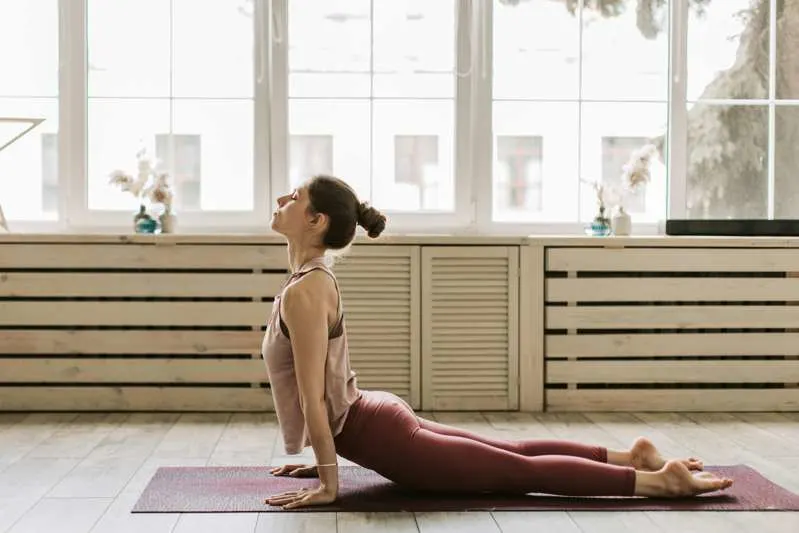
Image description: A person sitting in a simple cross-legged pose on a yoga mat in a quiet, natural setting, hands resting on knees, eyes closed, embodying stillness and breath awareness.
Alt text: Hatha Yoga practitioner in seated meditation pose demonstrating traditional practice and breath awareness.
What Hatha Yoga Really Means
The word "Hatha" is often translated as forceful, but that misses the point. "Ha" refers to the sun, "Tha" to the moon. Hatha Yoga is about balancing these two—effort and ease, movement and stillness, activity and rest.
It is not exercise in the modern sense. It is a discipline that uses the body to steady the mind. The poses are not performed for flexibility or strength alone, though these may develop. They are held to create conditions where breath can deepen, attention can settle, and the nervous system can find a different rhythm.
This is why Hatha Yoga feels different from other physical practices. The aim is not to improve the body for its own sake, but to prepare it for something quieter.
The Foundations of Hatha Yoga Practice
Traditional hatha yoga rests on a few core principles. These are not beliefs or concepts to accept intellectually. They are things you understand through repetition.
Asana as Preparation, Not Performance
Asana means seat. In classical hatha yoga, postures were developed to make sitting for long periods bearable. Over time, the practice expanded to include a range of poses, but the intention remained the same—to stabilize the body so the mind would stop reacting to discomfort.
Hatha yoga poses are held longer than in most other styles. There is time to feel the resistance in a muscle, the unevenness of your breath, the places where you are working harder than necessary. This is the practice. Not the final shape of the pose, but what happens while you are in it.
Pranayama and Breath Awareness
Breath is where Hatha Yoga begins and ends. Pranayama is the formal practice of working with breath, but breath awareness runs through the entire session. You learn to notice when the breath becomes shallow or held, and you learn to soften around that.
Over time, this awareness extends beyond the mat. You begin to notice how you breathe when you are anxious, or tired, or distracted. Hatha Yoga does not fix these states, but it gives you a reference point—a memory of what it feels like when the breath is full and even.
Stillness Between Movements
One of the most misunderstood aspects of hatha yoga practice is the pauses. Between poses, there is often a period of rest—lying down, sitting, or simply standing. These are not breaks. They are part of the practice.
Stillness allows the effects of a pose to settle. It gives the nervous system time to register what has shifted. Rushing from one posture to the next removes this. What remains is just physical exertion.
Discipline and Simplicity
Hatha Yoga does not require elaborate props or advanced anatomy knowledge. What it does require is consistency. The same poses, repeated over months and years, reveal different things each time.
This simplicity can feel frustrating at first, especially if you are used to variety or progression. But yogic discipline is not about accumulating new skills. It is about returning to the same ground until you see it clearly.
Benefits of Hatha Yoga Beyond the Physical
People often begin Hatha Yoga for physical reasons—back pain, stiffness, poor posture. These may improve, but they are not the deepest benefits.
What tends to shift more noticeably is mental steadiness. The mind still wanders, but there is less compulsion to follow every thought. Emotional reactions become less automatic. Not because you are suppressing them, but because there is a small gap between stimulus and response.
According to research from institutions like Harvard Medical School, practices that combine controlled breathing and gentle movement can help regulate the nervous system, reducing markers of stress and improving overall resilience. This aligns with what traditional practitioners have observed for centuries.
Hatha Yoga also serves as preparation for meditation. Sitting still is difficult when the body is restless or the breath is erratic. Asana and pranayama address both, creating conditions where meditation becomes possible without force.
None of this happens quickly. The hatha yoga benefits accumulate slowly, often in ways you do not notice until something that used to unsettle you no longer does.
Hatha Yoga as a Daily Practice
The traditional approach to Hatha Yoga emphasizes regularity. Twenty minutes each day is more effective than two hours once a week. The body and nervous system respond to rhythm, not intensity.
This does not mean the practice stays the same every day. Some days the body is stiff. Some days the mind is restless. Hatha yoga for beginners and experienced practitioners alike is about working with what is present, not forcing a particular outcome.
Listening becomes more important than achieving. If a pose feels strained, you adjust. If the breath becomes shallow, you pause. Over time, this listening becomes instinctive.
Hatha Yoga is also accessible across different ages and physical abilities. Poses can be modified, held for shorter or longer periods, or replaced with simpler variations. The method adapts, but the principles remain.
How Hatha Yoga Differs from Modern Yoga Styles
Many contemporary yoga classes are fast-paced, set to music, and structured around continuous movement. Hatha Yoga is slower. Poses are held longer. Transitions are deliberate.
This slowness is not a limitation. It is the point. When a pose is held for several breaths, you have time to notice where you are gripping, where your attention drifts, how your breath responds to discomfort. This internal experience is harder to access when movement is constant.
Modern styles often emphasize alignment, aesthetics, or athleticism. Hatha Yoga is less concerned with how a pose looks from the outside. What matters is whether it creates stability and openness in the body, and whether the breath remains steady.
This does not make one approach better than another. But if you are looking for awareness over choreography, Hatha Yoga offers that.
Who Hatha Yoga Is Most Suitable For
Hatha Yoga suits people who want to slow down. It works for beginners because it does not demand flexibility, strength, or prior experience. The poses are foundational, and there is no pressure to advance quickly.
It also suits serious practitioners who have tried faster, more athletic styles and found them lacking in depth. Hatha Yoga asks different questions—not how far you can stretch, but what you notice when you do.
People drawn to traditional paths tend to find something in Hatha Yoga that modern adaptations do not provide. There is less concern with innovation or variety, and more emphasis on refining what is already there.
If you are looking for stimulation or distraction, Hatha Yoga may feel too quiet. But if you are looking for balance—between effort and ease, mind and body, movement and stillness—it offers a clear and tested method.
Closing Thoughts
Hatha Yoga has persisted not because it is trendy, but because it addresses something constant in human experience. The body gets tight. The breath becomes shallow. The mind moves faster than it should. These things do not change across centuries or cultures.
At Advait Yoga Meditation, we teach Hatha Yoga as it has been practiced traditionally—without embellishment, without hurry. For those interested in deepening their practice or learning to teach, we offer Hatha Yoga teacher training and yoga teacher training in India, rooted in the same principles described here.
The practice does not need promotion. It speaks for itself to those who need it.